Anita Maurya vs State of Uttar Pradesh
The big legal question
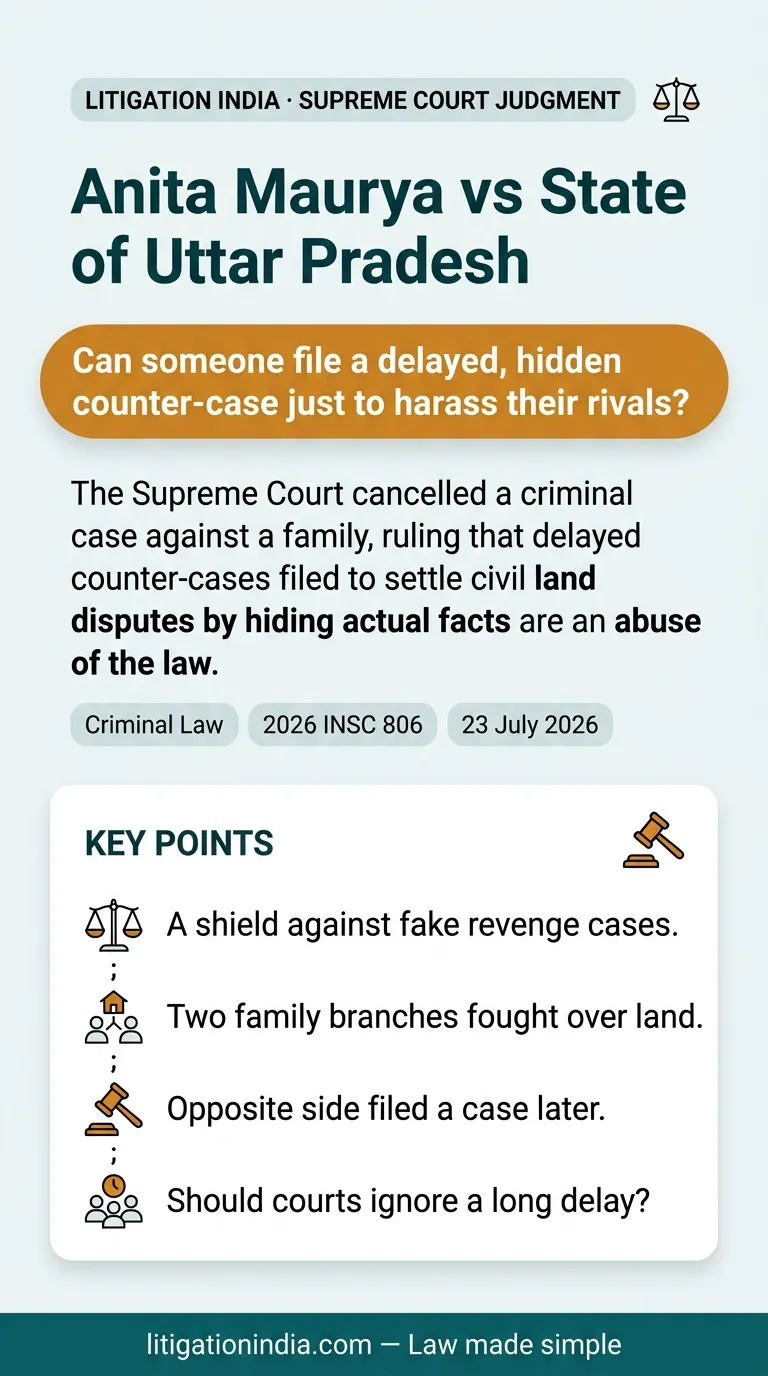
Can someone file a delayed, hidden counter-case just to harass their rivals?
“The Supreme Court cancelled a criminal case against a family, ruling that delayed counter-cases filed to settle civil land disputes by hiding actual facts are an abuse of the law.”
Story Slides
In short
This judgment of the Supreme Court of India protects citizens from being harassed by fake and retaliatory criminal cases. The dispute arose between two branches of a family in Jaunpur, Uttar Pradesh, over a long-standing land issue. Following a physical clash on November 9, 2020, one side immediately filed a police complaint (FIR), which led to a formal investigation and a trial against the other side. A year later, as a retaliatory move, the opposite side filed a private criminal complaint in court against eight members of the first family, including three women. Crucially, they did not mention the already existing police case against themselves, nor did they explain the long delay in filing their complaint. The Magistrate summoned the entire family to face trial, and the Allahabad High Court refused to cancel the case. However, the Supreme Court reversed this decision. The Supreme Court ruled that when a criminal complaint is filed purely for revenge to settle a civil dispute, courts must look deeper than just the surface. Since the complaint was filed after a long, unexplained delay and deliberately hid the existing police case, it was clearly a malicious counter-attack designed to harass the entire family. Consequently, the Supreme Court cancelled the entire criminal complaint and the summoning orders to prevent the abuse of the legal process.
Background
A long-standing land dispute between two family branches led to a physical fight. One side filed an immediate police complaint (FIR), which went to trial. A year later, the other side filed a private criminal case against the entire opposing family for the same incident, hiding the existing FIR.
The Decision
The Supreme Court set aside the High Court's order and cancelled the entire criminal complaint against the family. It ruled that delayed, retaliatory cases that hide crucial facts are a clear abuse of the court's process.
Why it matters for you
This judgment is a shield for common people against false, retaliatory criminal cases filed during civil disputes. It reminds lower courts to carefully examine delayed complaints and prevent families from being dragged into baseless trials.
AI-assisted summary, reviewed and verified by our editorial team.
Need help with your case?
Facing a similar legal challenge in the Supreme Court or High Court? Connect with our pro bono volunteer advocates today.
Related Supreme Court services