Landmark Supreme Court of India rulings, explained in clear, plain language.
Filter by Act / Section
Showing 6 of 6 judgments
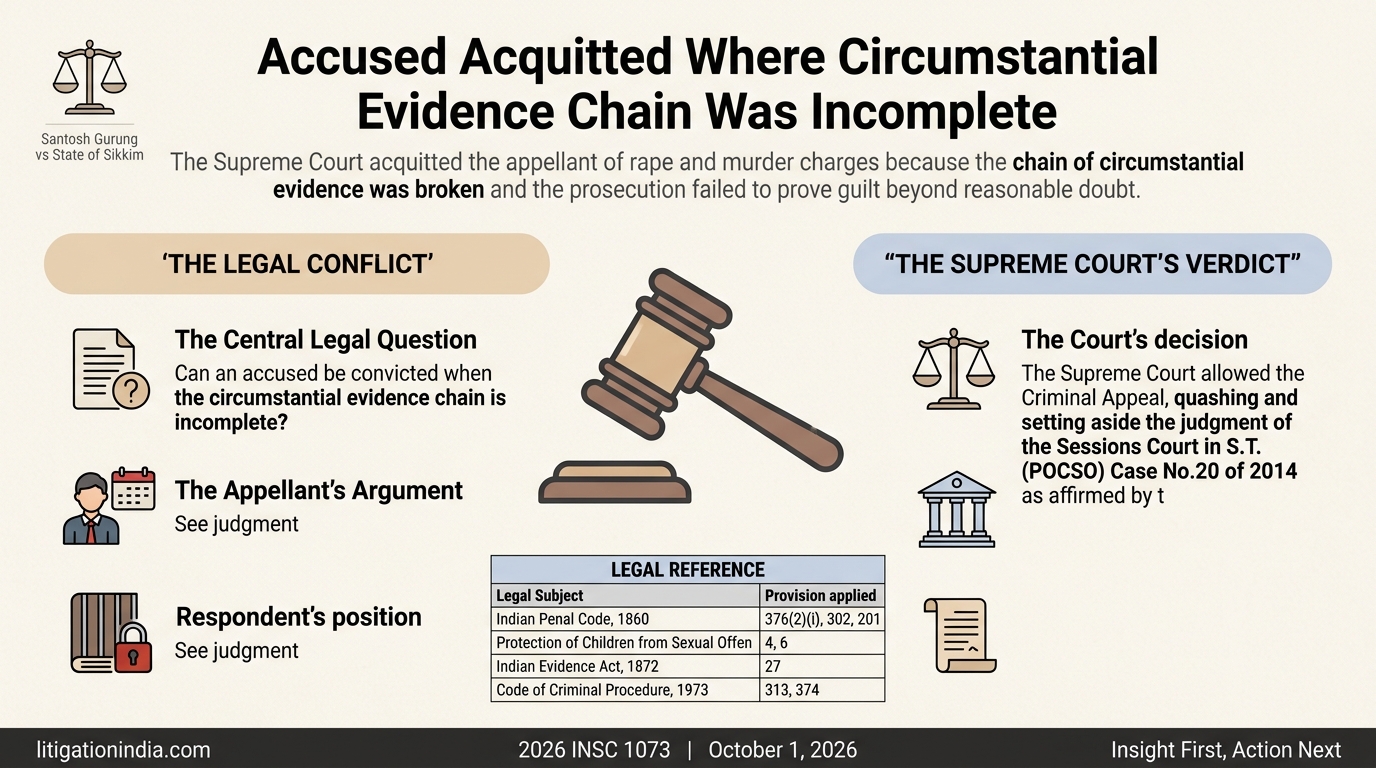
Can an accused be convicted when the circumstantial evidence chain is incomplete?
Santosh Gurung vs State of Sikkim
The Supreme Court acquitted the appellant of rape and murder charges because the chain of circumstantial evidence was broken and the prosecution failed to prove guilt beyond reasonable doubt.
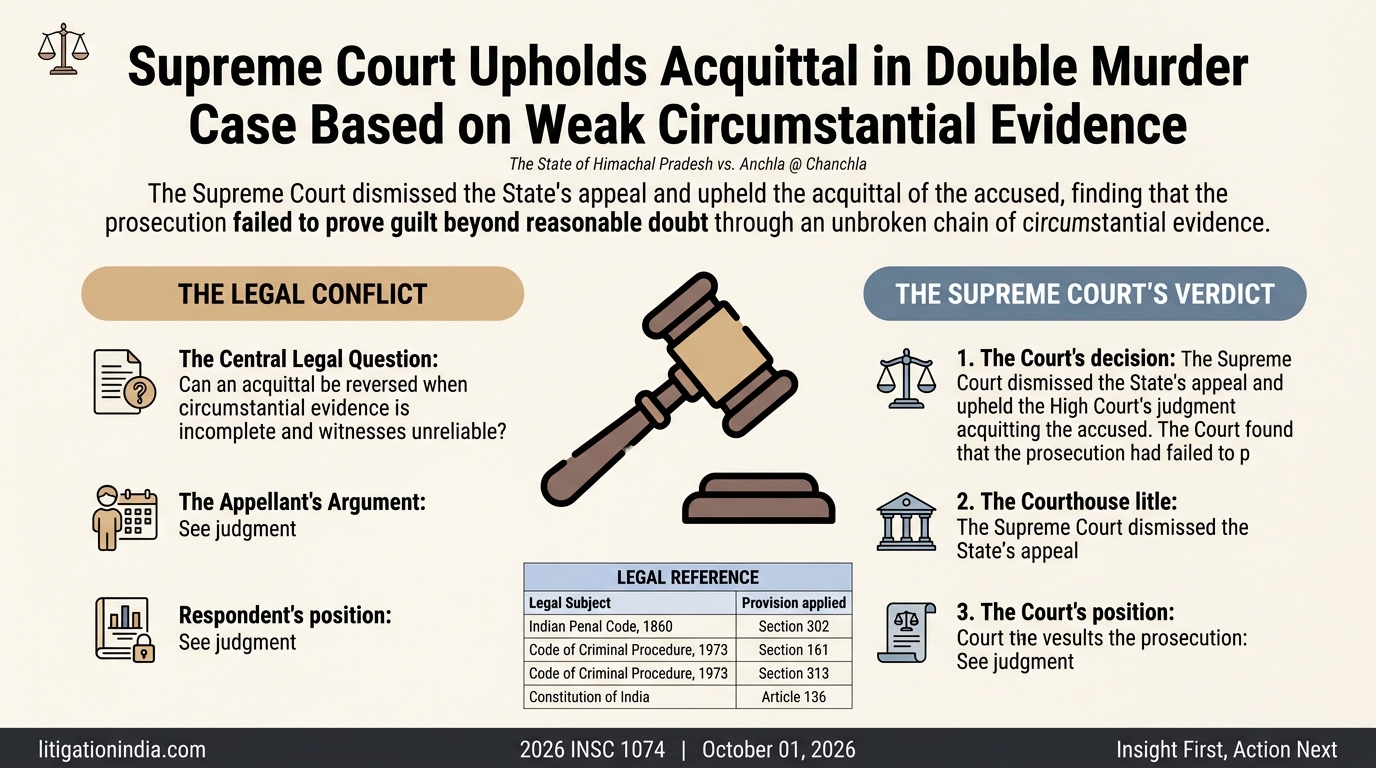
Can an acquittal be reversed when circumstantial evidence is incomplete and witnesses unreliable?
The State of Himachal Pradesh vs. Anchla @ Chanchla
The Supreme Court dismissed the State's appeal and upheld the acquittal of the accused, finding that the prosecution failed to prove guilt beyond reasonable doubt through an unbroken chain of circumstantial evidence.
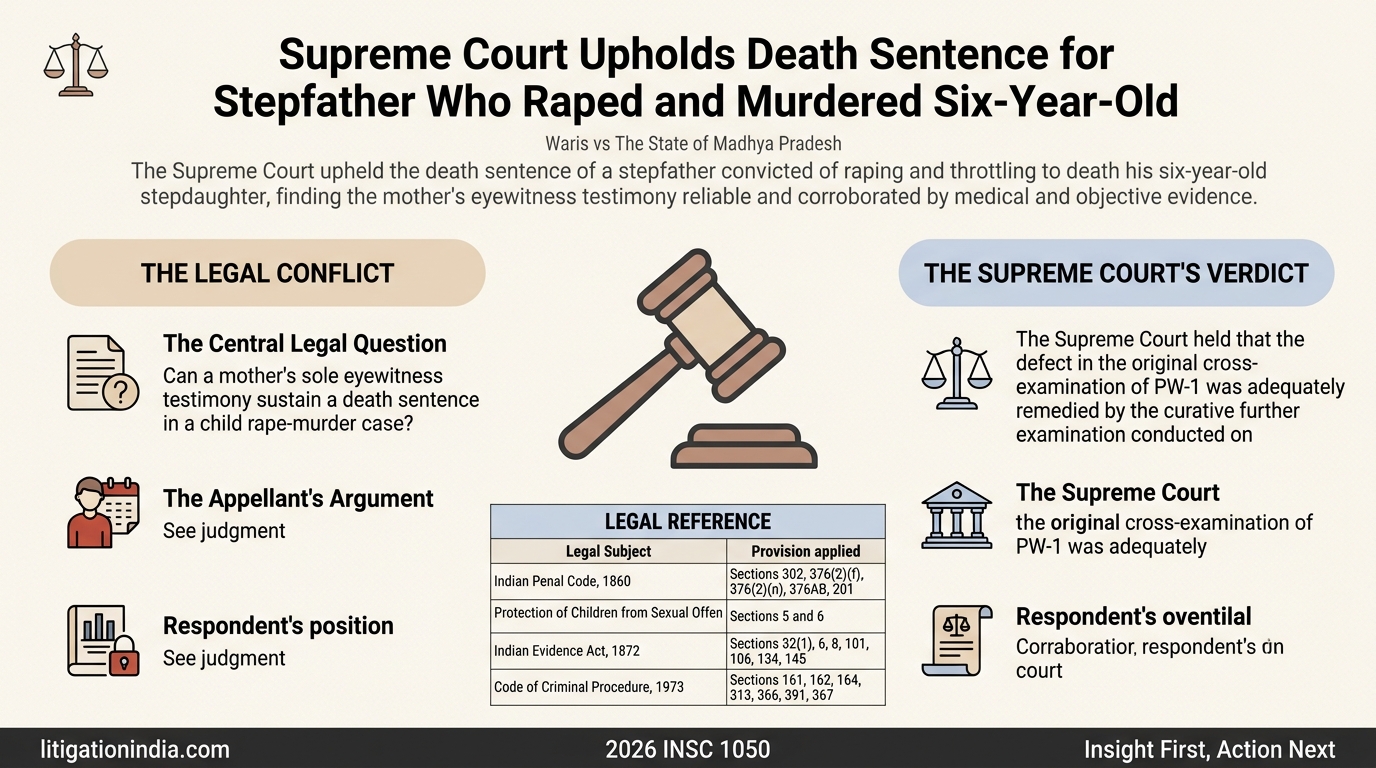
Can a mother's sole eyewitness testimony sustain a death sentence in a child rape-murder case?
Waris vs The State of Madhya Pradesh
The Supreme Court upheld the death sentence of a stepfather convicted of raping and throttling to death his six-year-old stepdaughter, finding the mother's eyewitness testimony reliable and corroborated by medical and objective evidence.
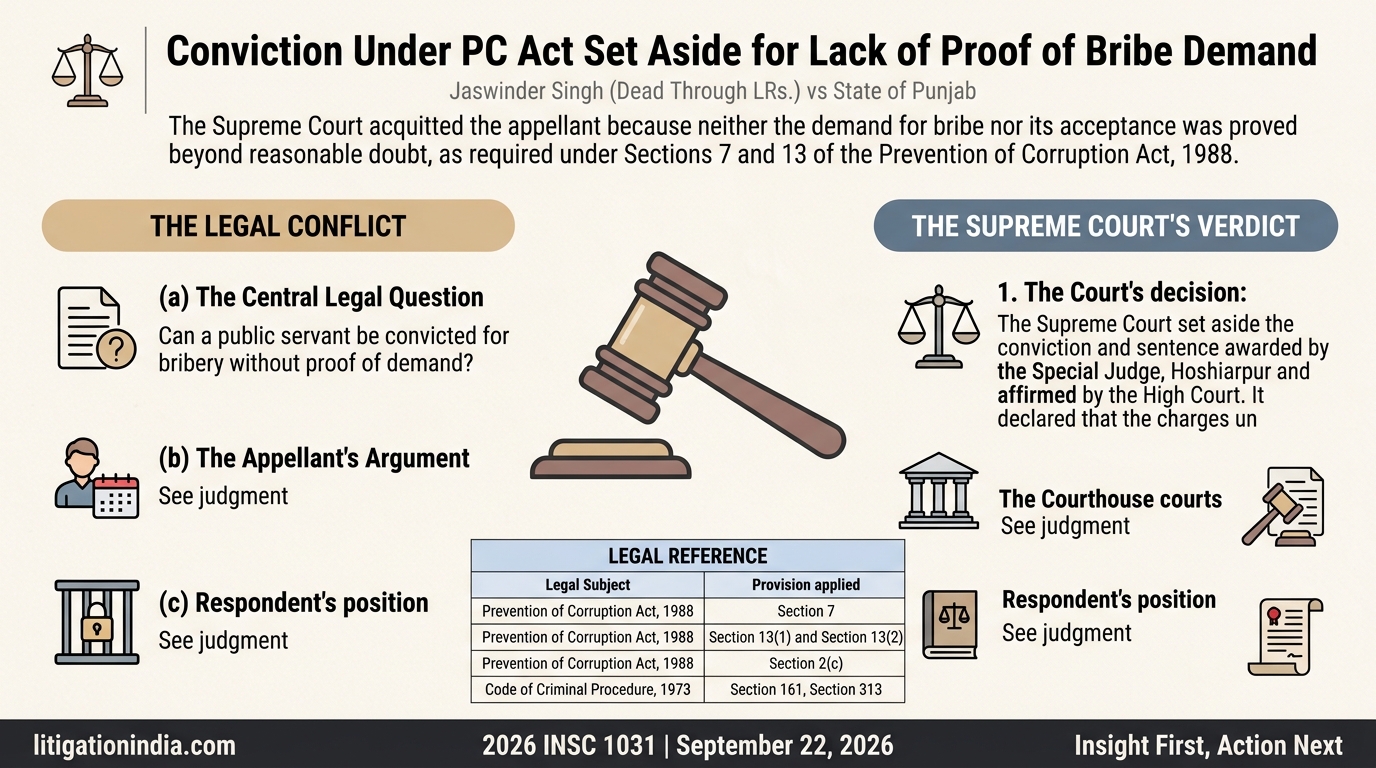
Can a public servant be convicted for bribery without proof of demand?
Jaswinder Singh (Dead Through LRs.) vs State of Punjab
The Supreme Court acquitted the appellant because neither the demand for bribe nor its acceptance was proved beyond reasonable doubt, as required under Sections 7 and 13 of the Prevention of Corruption Act, 1988.
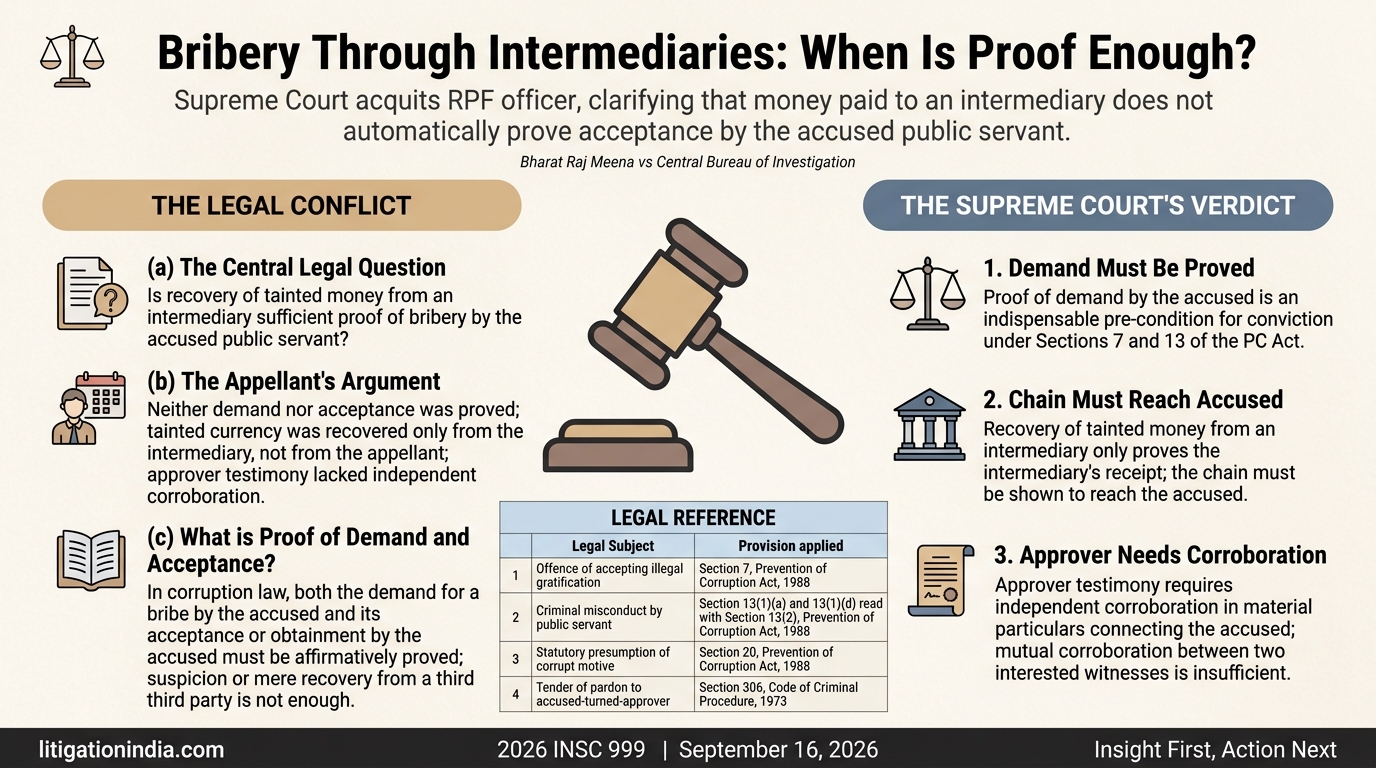
Can a public servant be convicted for bribery when money was paid only to intermediaries?
Bharat Raj Meena vs Central Bureau of Investigation
The Supreme Court acquitted the appellant in both corruption cases, holding that the prosecution failed to prove beyond reasonable doubt that illegal gratification was demanded by or ultimately reached the appellant through the intermediaries.
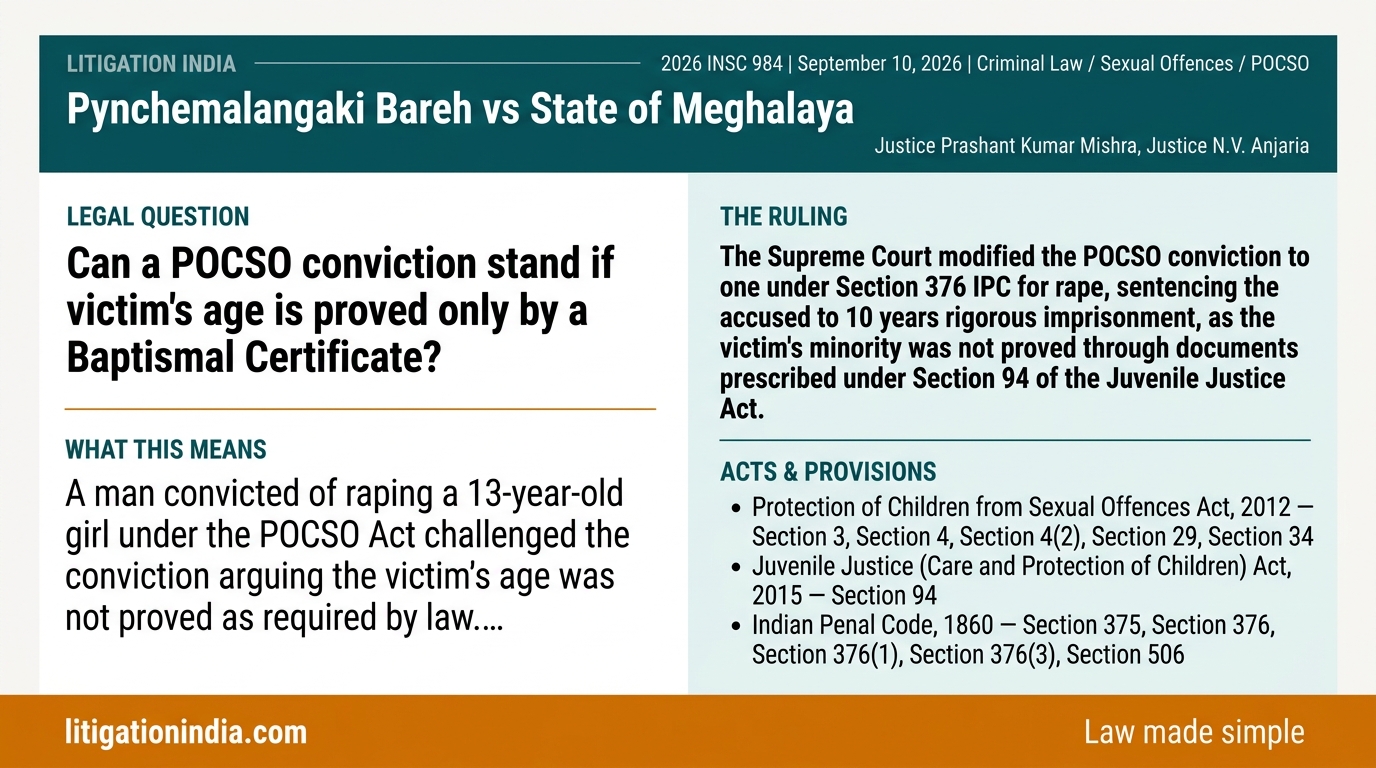
Can a POCSO conviction stand if victim's age is proved only by a Baptismal Certificate?
Pynchemalangaki Bareh vs State of Meghalaya
The Supreme Court modified the POCSO conviction to one under Section 376 IPC for rape, sentencing the accused to 10 years rigorous imprisonment, as the victim's minority was not proved through documents prescribed under Section 94 of the Juvenile Justice Act.
You have reached the end — all 6 judgments loaded.