
Supreme Court Judgment Update card
Download Share Card (4:5)In short
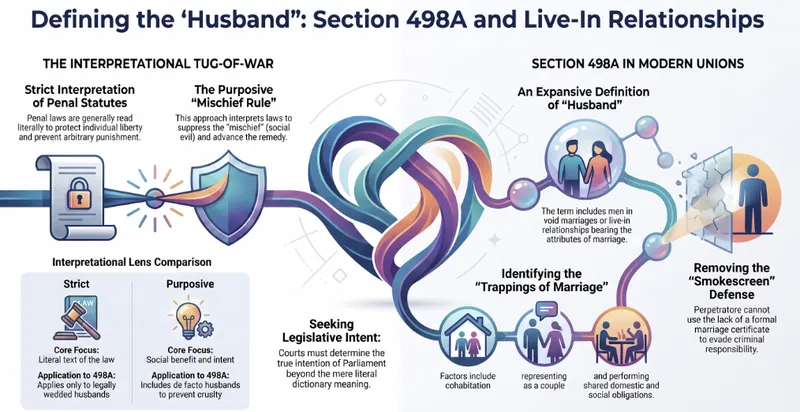
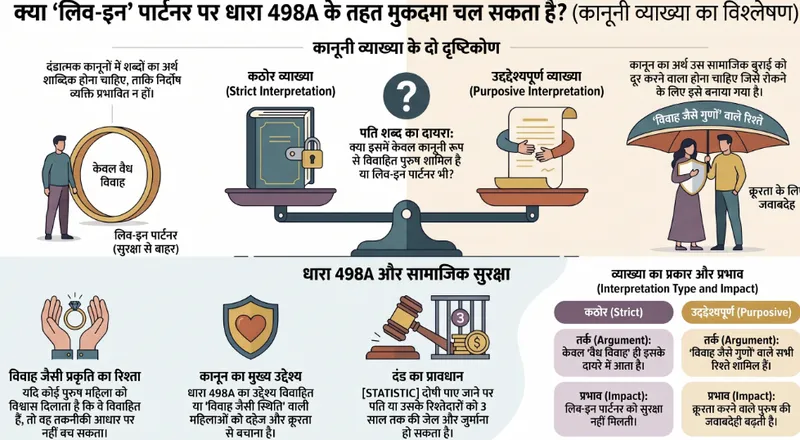
In this landmark judgment, the Supreme Court addressed whether a man in a live-in relationship can be prosecuted for domestic cruelty under Section 498A of the Indian Penal Code (IPC). A woman had filed a complaint against her partner, alleging he hid his first marriage, lived with her as a husband, and subjected her to cruelty and dowry demands. The man argued that since they were not legally married, Section 498A (which applies to a 'husband' or his relatives) could not be used against him. Disagreeing with this argument, the Supreme Court ruled that a strict, literal interpretation of the word 'husband' would allow wrongdoers to escape punishment simply because the marriage was not legally valid. The Court held that Section 498A protects women in live-in relationships that qualify as 'relationships in the nature of marriage,' provided there was a clear intention to marry. However, to prevent misuse, the Court established strict safeguards. The woman must initially prove the intent to marry, and the police cannot make routine arrests without a proper preliminary inquiry as laid down in the Arnesh Kumar case. Since there were serious allegations of physical abuse and hiding a prior marriage in this case, the Court refused to throw out the criminal proceedings, directing the trial to continue.
“The Supreme Court ruled that a woman in a live-in relationship can file a domestic cruelty case under Section 498A IPC if the relationship is like a marriage and there was an intent to marry.”
Story Slides
Background
The Decision
Why it matters for you
Frequently Asked Questions
Photos
AI-assisted summary, reviewed and verified by our editorial team.