Can a judicial decision stand if its reasoning relies on fake, non-existent precedents generated by Artificial Intelligence?
Judicial decisions relying on fake, AI-generated precedents are null and void in the eyes of law
What this case means
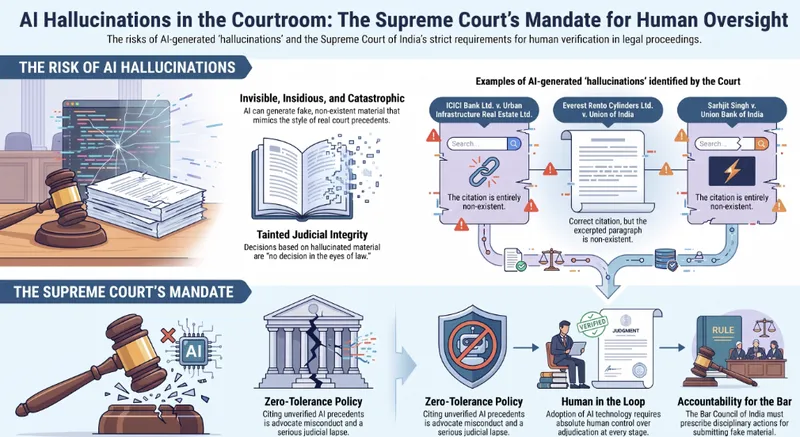
This landmark case addresses the severe threat of AI "hallucinations" in the legal system. The Supreme Court ruled that any judgment relying on fake, AI-generated precedents is a nullity and must be set aside immediately. It establishes a strict zero-tolerance policy for both the Bench and the Bar to preserve judicial integrity
In short
In an appeal against NCLT and NCLAT orders, the Supreme Court discovered that the NCLT had relied on six fake, non-existent case precedents in its judgment . These citations were apparently generated via Artificial Intelligence . Holding that a decision tainted by hallucinated material is "no decision in the eyes of law," the Supreme Court set aside both rulings and restored the case to NCLT for fresh, expeditious disposal on its merits . The Court declared a strict zero-tolerance policy for unverified AI-generated content and directed the Bar Council of India to establish guidelines and disciplinary protocols for the Bar
“The Supreme Court rules that any judicial or tribunal decision incorporating fake, AI-generated legal precedents is a nullity and must be set aside.”
Story Slides
Background
The Decision
Why it matters for you
Frequently Asked Questions
Photos