M/s. Utkarsh Enterprises vs. Union of India
The big legal question
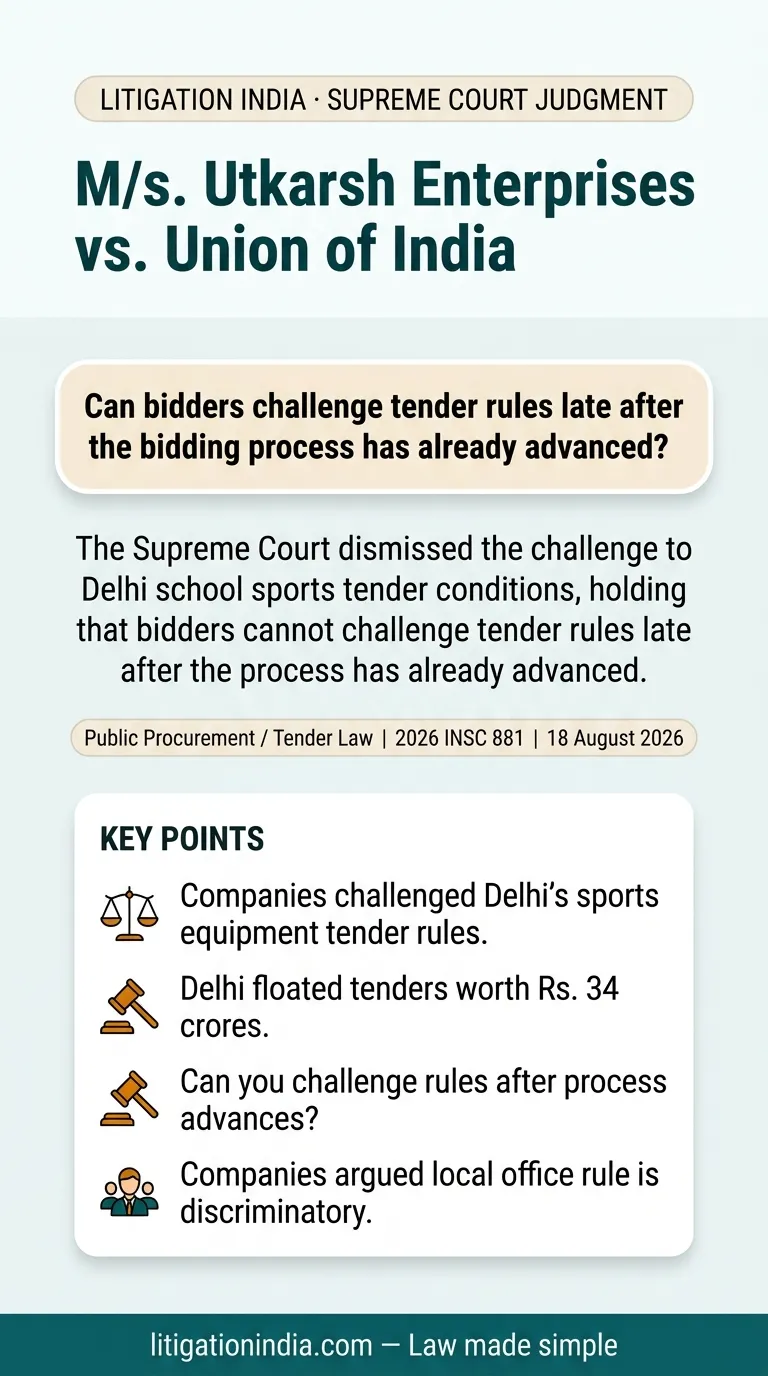
Can bidders challenge tender rules late after the bidding process has already advanced?
“The Supreme Court dismissed the challenge to Delhi school sports tender conditions, holding that bidders cannot challenge tender rules late after the process has already advanced.”
Story Slides
In short
The Supreme Court of India dismissed appeals filed by private companies challenging the tender conditions for buying sports and gym equipment for government schools in Delhi. The Delhi Government's Directorate of Education had floated these tenders to provide sports kits and gym equipment worth Rs. 34 crores to about 16 lakh school children. The complaining companies argued that the conditions were too harsh and exclusionary. Specifically, they challenged requirements like having a functional warehouse/office in Delhi for three years, giving physical samples, and lack of relaxations for small businesses. However, the companies filed their court case four months after the tenders were published. By then, some tenders were already awarded, and others had reached advanced stages of evaluation. The Supreme Court ruled that any challenge to a tender's eligibility rules must be filed immediately after the rules are published. Waiting too long creates rights for other bidders who followed all the rules and successfully passed technical checks. The Court emphasized that stopping the process late would harm public interest, especially the school children waiting for sports equipment. Therefore, due to the delay, the Supreme Court refused to interfere with the High Court's decision and left the legal question of whether a local office/warehouse can be mandated open for a future case.
Background
The Delhi government floated seven tenders to buy sports and gym equipment worth Rs. 34 crores for 16 lakh school children. Private companies challenged the rules (like having a Delhi warehouse and providing physical samples) as unfair and exclusionary. However, they approached the court four months late, after the bidding process had already progressed significantly.
The Decision
The Supreme Court dismissed the appeals and refused to change the tender conditions due to the heavy delay in filing the case. It held that challenging tender terms at an advanced stage disrupts public procurement and harms public interest. The court left the legal question of whether a local warehouse requirement is valid open for a future case.
Why it matters for you
This judgment clarifies that businesses cannot stay silent and challenge tender rules at their own convenience once the bidding process is almost over. It prioritizes timely public welfare projects, like school sports equipment, over late commercial disputes.
AI-assisted summary, reviewed and verified by our editorial team.
Need help with your case?
Facing a similar legal challenge in the Supreme Court or High Court? Connect with our pro bono volunteer advocates today.
Request Free Callback