Singapogu Babu Rao vs Special Deputy Collector
The big legal question
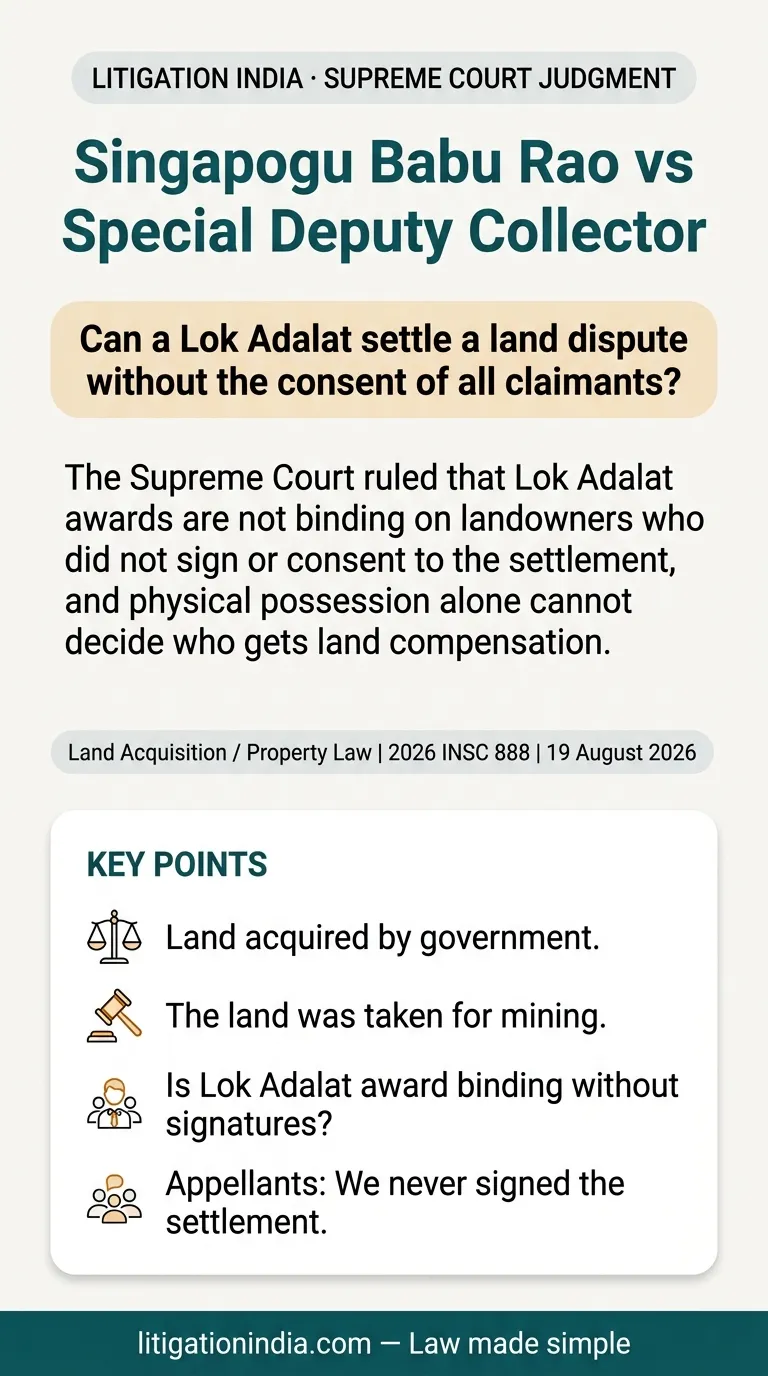
Can a Lok Adalat settle a land dispute without the consent of all claimants?
“The Supreme Court ruled that Lok Adalat awards are not binding on landowners who did not sign or consent to the settlement, and physical possession alone cannot decide who gets land compensation.”
Story Slides
In short
When the government acquires land, it pays money (compensation) to the landowners. If there is a dispute over who actually owns the land, this dispute must be decided by a civil court. In this case, the government acquired land for mining, but several people claimed ownership of the same plots. The matter went to a Lok Adalat, which is a forum for friendly settlements. The Lok Adalat passed awards distributing the money based on a survey of who was physically using the land (called an 'enjoyment survey'). However, some of the key rival landowners did not sign or agree to this settlement. The High Court of Telangana upheld these awards, saying they were valid. The Supreme Court disagreed and cancelled the High Court's order. It made two major rules. First, a Lok Adalat has no power to decide a dispute on its own; it can only record a settlement if everyone involved agrees and signs. If even one rival claimant is left out, the award is invalid. Second, a physical possession survey cannot prove who legally owns the land. Legal ownership must be verified through proper title papers. The Supreme Court sent the case back to the District Court to decide the ownership and divide the money properly within six months.
Background
The government acquired land for mining, but rival landowners disputed who should get the compensation money. The dispute was sent to a Lok Adalat, which distributed the money based on physical possession, leaving out several claimants who did not sign the agreement.
The Decision
The Supreme Court set aside the Lok Adalat awards because they lacked the consent and signatures of all disputing parties. It ordered the District Court to hear the case freshly and decide the true owners within six months.
Why it matters for you
This judgment protects common litigants from being cheated out of their property compensation. It confirms that nobody can take away your legal land rights through a fast-track settlement unless you actively agree and sign the papers.
AI-assisted summary, reviewed and verified by our editorial team.
Need help with your case?
Facing a property, eviction, or landlord-tenant dispute? Consult our property lawyers for a free initial review.
Related Supreme Court services