Shivappa vs Shantavva and Others
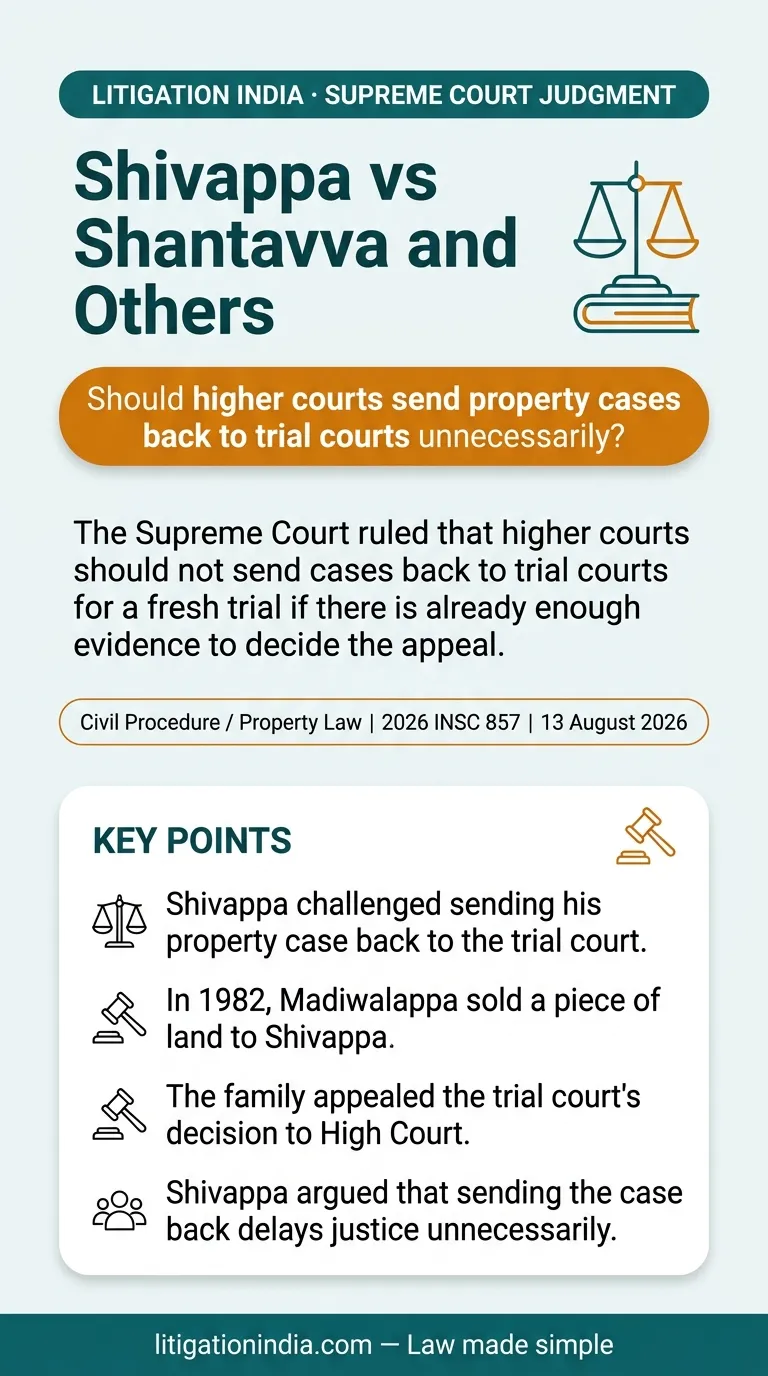
The big legal question
Should higher courts send property cases back to trial courts unnecessarily?
“The Supreme Court ruled that higher courts should not send cases back to trial courts for a fresh trial if there is already enough evidence to decide the appeal.”
Story Slides
In short
This case arose from a property dispute where the Plaintiffs filed a lawsuit in 2015 seeking partition of ancestral properties and challenging a 1982 sale deed of a specific land (Item No. 5) executed by their father in favor of Shivappa (Defendant No. 2). The Trial Court dismissed the challenge against the sale deed, ruling it was valid and that the lawsuit was filed too late (33 years after the sale). On appeal, the High Court reversed this finding and remanded (sent back) the case to the Trial Court, directing it to frame new issues about whether the sale deed was fake and to take fresh evidence. Shivappa appealed this to the Supreme Court. The Supreme Court allowed the appeal and set aside the High Court's order of sending the case back. It held that remanding a case should not be done as a matter of routine because it causes unnecessary delays and hardships to the parties. If the files, pleadings, and evidence are already complete on record, the appellate court must decide the case itself on merits rather than starting a fresh trial. Therefore, the Supreme Court sent the matter back to the High Court to decide the appeal on its merits based on the existing evidence.
Background
In 2015, family members filed a lawsuit to cancel a 1982 land sale deed made by their father, claiming it was fake. The buyer proved he bought the land legally for family needs and had been using it for over 30 years.
The Decision
The Supreme Court set aside the High Court's order sending the case back to the Trial Court. It directed the High Court to decide the case itself on its merits using the existing evidence.
Why it matters for you
This judgment helps common people avoid endless court cycles. It establishes that higher courts must resolve appeals on existing evidence rather than restarting trials, which saves time and money for litigants.
AI-assisted summary, reviewed and verified by our editorial team.
Need help with your case?
Facing a property, eviction, or landlord-tenant dispute? Consult our property lawyers for a free initial review.
Related Supreme Court services