
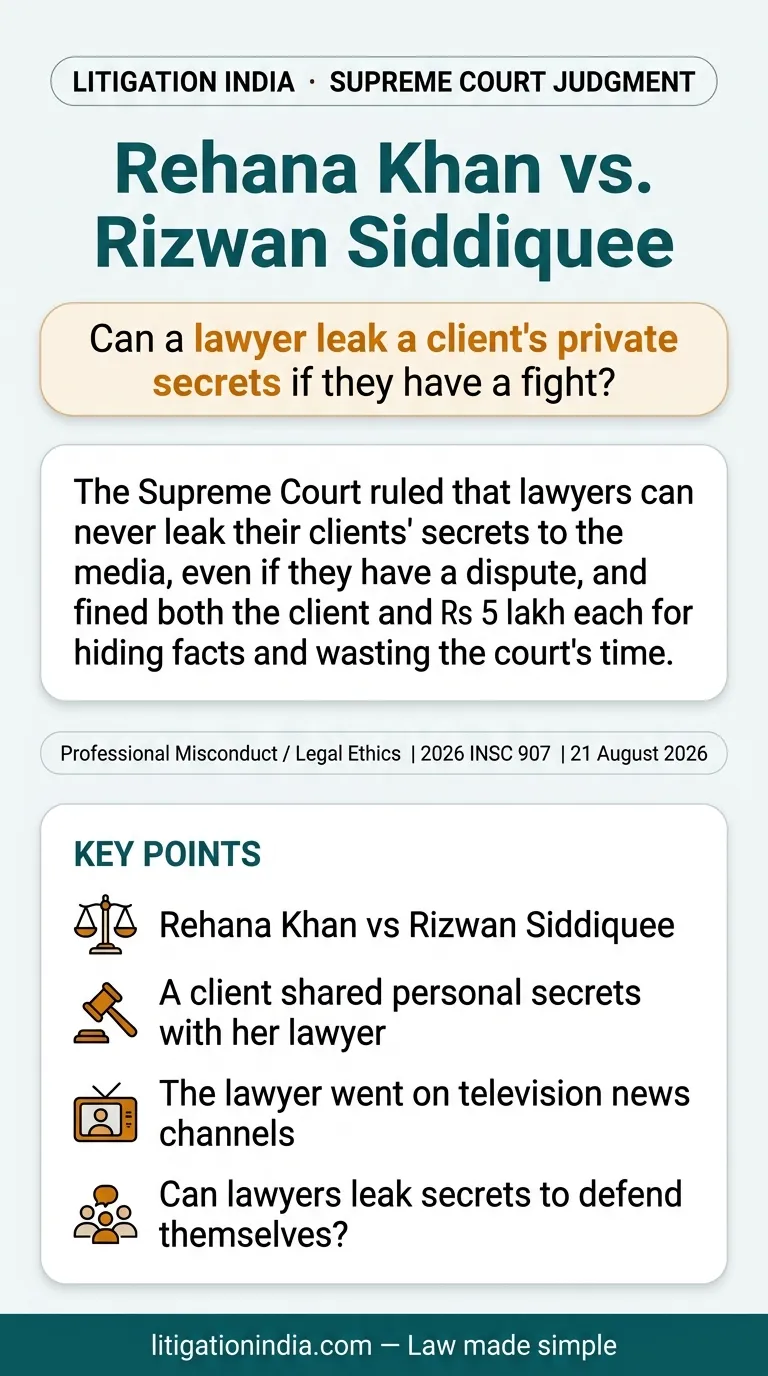
Can a lawyer leak a client's private secrets if they have a fight?
Rehana Khan vs. Rizwan Siddiquee
Case: Rehana Khan vs. Rizwan SiddiqueeCitation: 2026 INSC 907Decided on: 21 August 2026
“The Supreme Court ruled that lawyers can never leak their clients' secrets to the media, even if they have a dispute, and fined both the client and lawyer Rs 5 lakh each for hiding facts and wasting the court's time.”
Story Slides
In short
This case is about a big fight between a woman client and her former lawyer. The woman had hired the lawyer in 2013 after she accused a police officer of trying to sexually assault her. During this time, she shared many personal and secret details with her lawyer. Later, relations soured, and she filed a police complaint where she also accused the lawyer of helping the officer. To defend himself, the lawyer went on TV news channels. He revealed her secret messages, played recorded phone calls, and publicly claimed her rape complaint was false and done only for publicity. The Bar Council of India found the lawyer guilty of professional misconduct, suspended his license for two years, and fined him. Both parties challenged this in the Supreme Court. The lawyer argued he was only defending his reputation. The woman wanted him permanently banned and demanded Rs 2 crore in compensation. The Supreme Court refused to change the punishment. It ruled that a lawyer has a strict duty to keep client secrets safe. This duty does not end even if the client turns against the lawyer. However, the Court also found that both the woman and the lawyer had hidden important truths and wasted eleven years of court time. Therefore, the Court punished both of them by imposing a heavy fine of Rs 5 lakh each.
Need clarity on a similar legal issue?
Request free pro bono guidance from a Supreme Court Advocate.
Background
A woman shared private, sensitive details with her lawyer regarding her allegations against a police officer. When their relationship broke down, the lawyer went on television, showing private messages and call recordings to call her allegations false.
The Decision
The Supreme Court upheld the lawyer's two-year suspension for leaking secrets, but dismissed both parties' appeals. It also ordered both the lawyer and the client to pay Rs 5 lakh each as a penalty for hiding facts and wasting the court's time.
Why it matters for you
This judgment clearly warns lawyers that they can never break client confidentiality, even for self-defense on television. It also warns litigants that they must tell the complete truth in court, or they will face heavy fines for wasting judicial time.
AI-assisted summary, reviewed and verified by our editorial team.
Need help with your case?
Facing a similar legal challenge in the Supreme Court or High Court? Connect with our pro bono volunteer advocates today.
Request Free Callback