
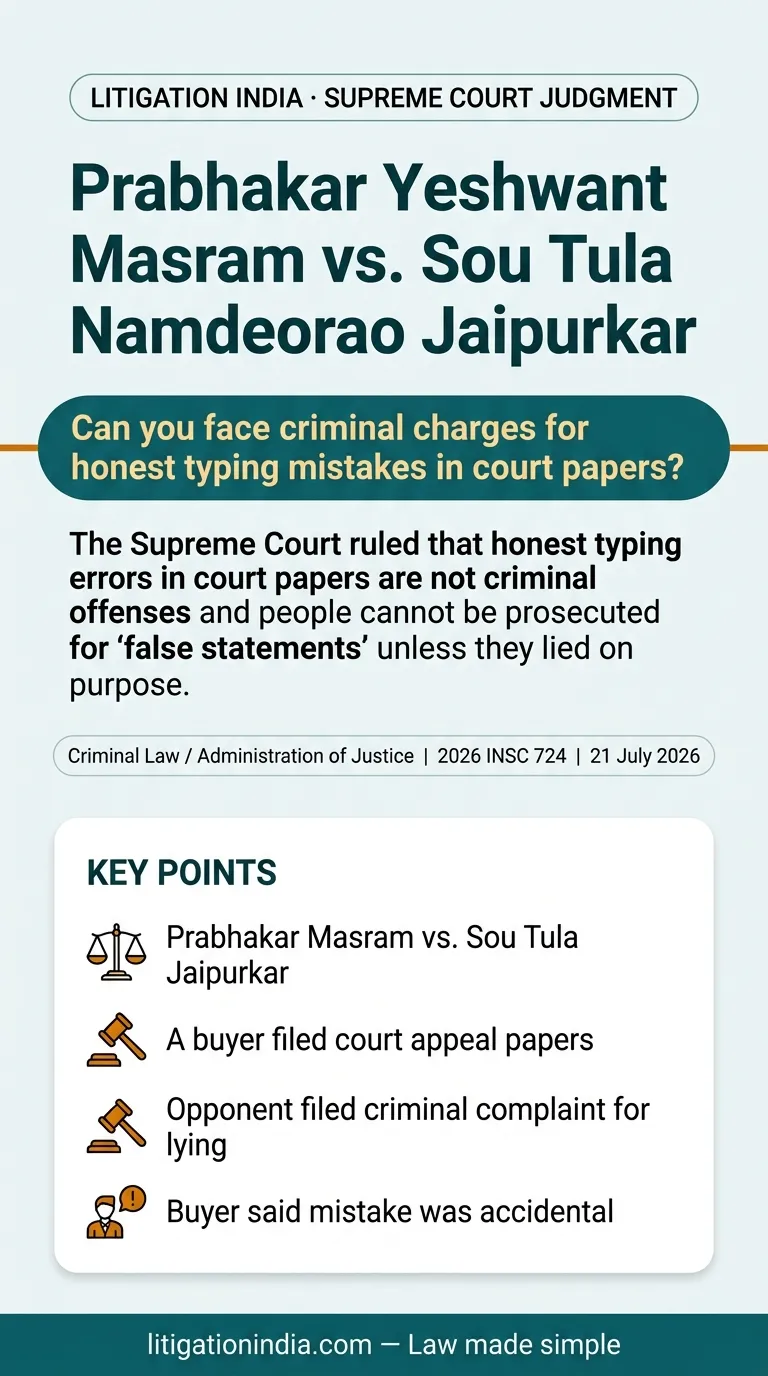
Can you face criminal charges for honest typing mistakes in court papers?
Prabhakar Yeshwant Masram vs. Sou Tula Namdeorao Jaipurkar
Case: Prabhakar Yeshwant Masram vs. Sou Tula Namdeorao JaipurkarCitation: 2026 INSC 724Decided on: 21 July 2026
“The Supreme Court ruled that honest typing errors in court papers are not criminal offenses and people cannot be prosecuted for 'false statements' unless they lied on purpose.”
Story Slides
In short
This case explains that simple, unintentional mistakes in court papers are not crimes. A property dispute was going on in court. The defendant filed an appeal where his typist made a few errors. For example, they typed 'dismissed' instead of 'disposed of' and missed typing the word 'no'. When the defendant and his lawyer realized this, they immediately filed a paper to correct these mistakes and apologized to the court. However, the other side filed a complaint under Section 340 of the Criminal Procedure Code, demanding criminal action against the defendant and his lawyer for giving 'false evidence'. The lower court and the High Court ordered a criminal case against them, calling these 'wrong statements'. The Supreme Court cancelled this criminal case. It explained that there is a huge difference between a 'wrong statement' (an accidental mistake) and a 'false statement' (a deliberate lie told to deceive the court for unfair benefit). Under the law, a person can only be prosecuted if they lied on purpose. The Court also warned that criminal cases should not be started for minor, harmless mistakes just to help one side get revenge on the other. Courts must only order prosecution when it is truly necessary for justice.
Need clarity on a similar legal issue?
Request free pro bono guidance from a Supreme Court Advocate.
Background
During a property dispute, a buyer filed appeal papers. Due to a part-time typist's mistake, incorrect words were typed. Although the buyer quickly applied to correct these clerical errors, the opposing party filed a criminal case accusing them of lying to the court.
The Decision
The Supreme Court cancelled the criminal case against the buyer and his lawyer. The Court held that honest typing mistakes are not crimes and people cannot be prosecuted unless there is a clear, deliberate intention to mislead the court.
Why it matters for you
This ruling is a big relief for common litigants and lawyers. It ensures that honest people are not dragged into criminal courts or harassed over harmless clerical and typographical mistakes made in court filings.
AI-assisted summary, reviewed and verified by our editorial team.
Need help with your case?
Facing a similar legal challenge in the Supreme Court or High Court? Connect with our pro bono volunteer advocates today.
Request Free Callback