Nazim Shaikh Hasan vs. Nasir Mushtaq Shaikh
The big legal question
Does signing a property purchase agreement automatically make a tenant the owner?
“The Supreme Court ruled that a tenant does not automatically become the owner or lose their tenant status just by signing an agreement to buy the rented property.”
Story Slides
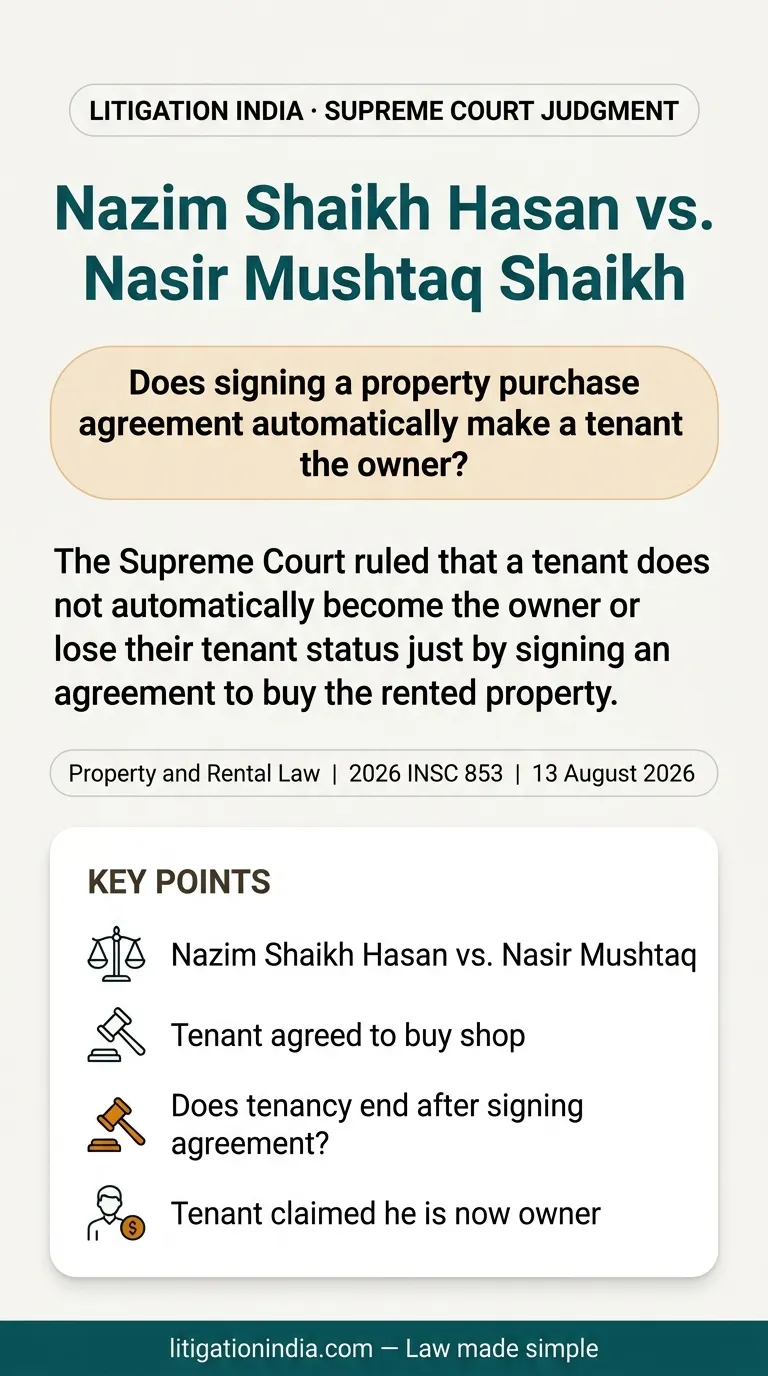
In short
In this case, a tenant living in a rented shop in Pune signed an agreement with his landlady to buy the shop. He paid a small advance amount, but the rest of the payment was delayed because his bank loan was not approved. The agreement itself stated that if the loan failed, the deal would cancel and the shop would go back to its original status. Years later, the landlady's family sued to evict the tenant due to unpaid rent and their personal need for the shop. The tenant argued that the tenancy had ended the moment they signed the purchase agreement, making him a prospective buyer who could not be evicted. The Supreme Court rejected the tenant's argument. It explained that merely signing an agreement to sell does not end a tenancy. For a tenancy to end, there must be a clear and written surrender of tenancy rights. Furthermore, since the purchase agreement was not registered, the tenant could not seek legal protection to stay in the property as a buyer. Since the sale fell through and the agreement was unregistered, the tenant remained a tenant and must vacate the shop as ordered by the lower courts.
Background
A tenant in Pune signed an agreement in 2004 to buy the shop he was renting but failed to pay the full amount because his loan was rejected. When the landlord later filed an eviction suit, the tenant claimed he was now a buyer and could not be evicted.
The Decision
The Supreme Court dismissed the tenant's appeal and upheld the eviction orders. It ruled that the tenancy remained active because the sale was never completed and the agreement was unregistered.
Why it matters for you
This judgment clarifies that tenants cannot stop paying rent or avoid eviction simply by signing an incomplete or unregistered agreement to buy the property. It protects landlords from tenants who try to capture properties using failed purchase deals.
AI-assisted summary, reviewed and verified by our editorial team.
Need help with your case?
Facing a property, eviction, or landlord-tenant dispute? Consult our property lawyers for a free initial review.
Related Supreme Court services