M/s Tata Steel Ltd. vs. Varsha & Anr.
The big legal question
Can suppliers continue old lawsuits to recover dues after a company's insolvency resolution plan is approved?
“The Supreme Court ruled that once a company's recovery plan is approved under the Insolvency Code, all pending lawsuits and arbitrations by suppliers for old dues are completely closed and cannot continue.”
Story Slides
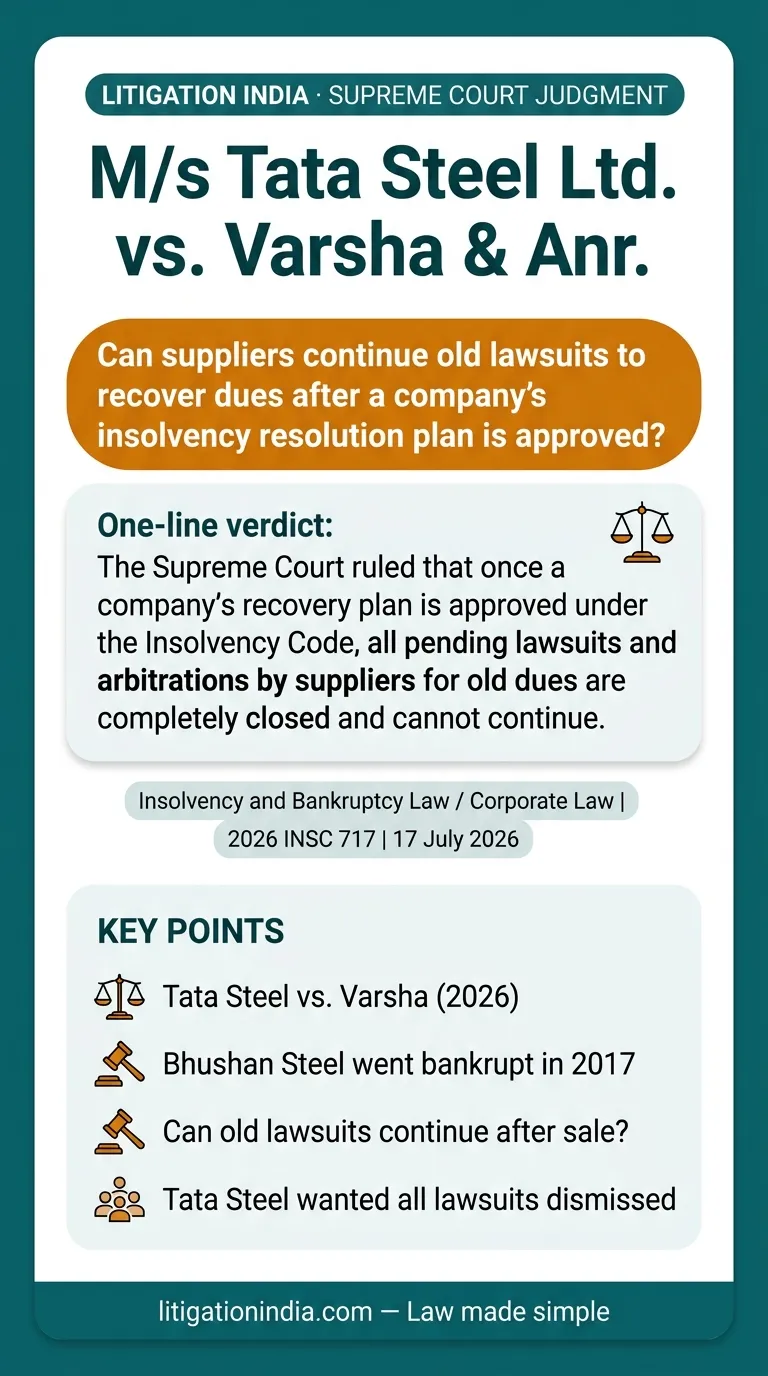
In short
In this case, the Supreme Court of India decided an important dispute about what happens to old, pending lawsuits when a failing company is sold to a new owner under the Insolvency and Bankruptcy Code (IBC). A company called Bhushan Steel was facing insolvency proceedings because it could not pay its debts. A supplier named Varsha and another called Masyc had old, ongoing legal cases (a civil lawsuit and arbitrations) against Bhushan Steel for unpaid dues. When the company was being sold, their disputed claims were recorded at a symbolic value of Rupee One (Rs. 1) each in the final list of creditors. Tata Steel bought the company through an approved resolution plan and asked the courts to dismiss the suppliers' pending lawsuits, arguing that it should start on a 'clean slate' without old legal burdens. The Bombay High Court originally allowed the supplier's lawsuit to continue, but the Supreme Court reversed this decision. The Supreme Court ruled that once a resolution plan is approved by the tribunal, all pending legal disputes that were not finalized by that date are legally closed and extinguished. Buyers cannot be surprised with old liabilities after taking over. While the court sympathized with small businesses (MSMEs) who lose their hard-earned money in such processes, it held that under the current law, the 'clean slate' rule is absolute.
Background
Bhushan Steel went bankrupt, and during its insolvency process, supplier companies Varsha and Masyc demanded their old dues. Because their claims were still being fought out in court and arbitration, they were listed at a temporary value of just Rupee One. Tata Steel eventually bought the bankrupt company and asked to shut down these pending legal cases.
The Decision
The Supreme Court allowed Tata Steel's appeal and dismissed the pending lawsuit and arbitration proceedings. The Court ruled that once a resolution plan is approved, any unresolved lawsuits for past dues stand permanently ended to give the new buyer a clean slate.
Why it matters for you
This judgment protects new buyers of sick companies from facing unexpected old lawsuits and debts. However, it also warns small businesses and MSMEs that if they do not secure and settle their claims before a company's insolvency plan is approved, they may lose their pending dues forever.
AI-assisted summary, reviewed and verified by our editorial team.
Need help with your case?
Facing a similar legal challenge in the Supreme Court or High Court? Connect with our pro bono volunteer advocates today.
Related Supreme Court services