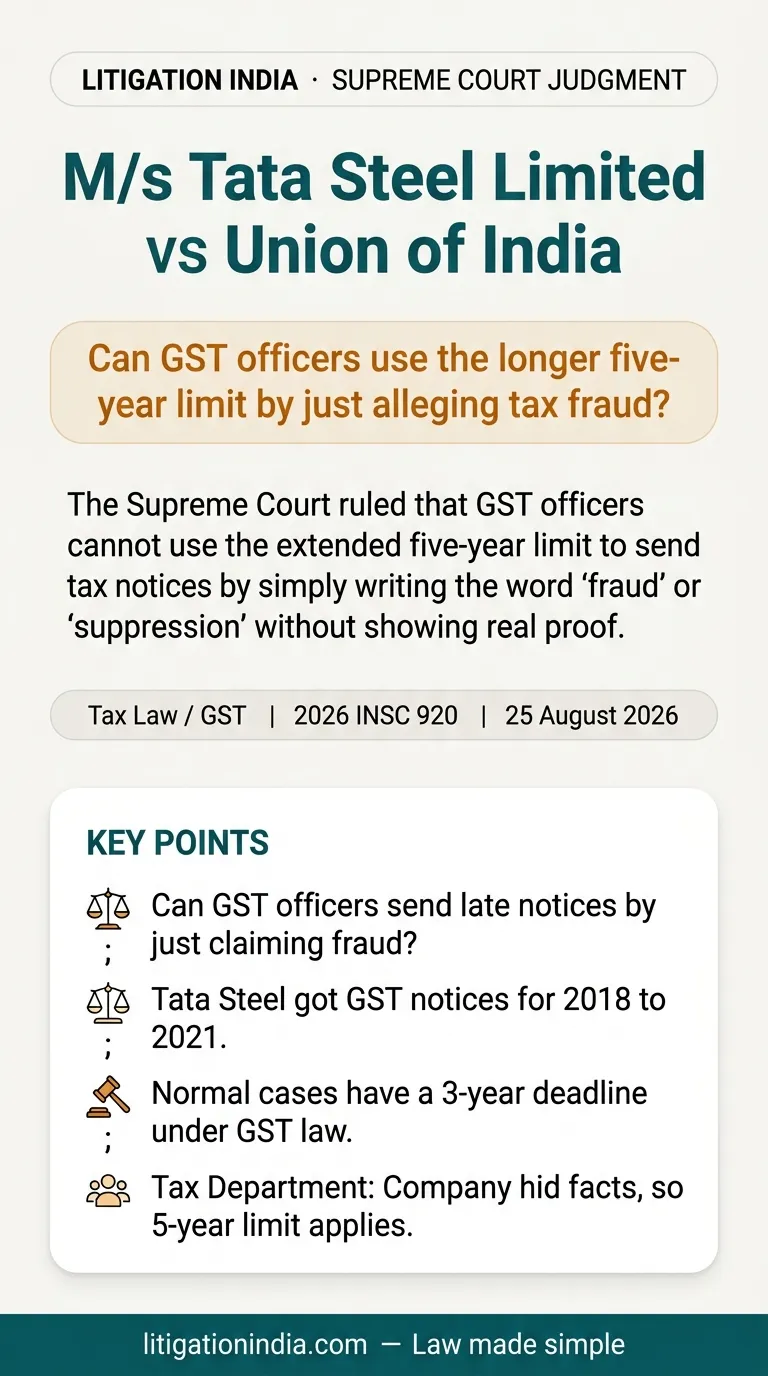
M/s Tata Steel Limited vs Union of India
The big legal question
Can GST officers use the longer five-year limit by just alleging tax fraud?
“The Supreme Court ruled that GST officers cannot use the extended five-year limit to send tax notices by simply writing the word 'fraud' or 'suppression' without showing real proof.”
Story Slides
In short
Under the GST law, if the government wants to demand unpaid tax or correct wrong tax credits, they normally have three years to do so (under Section 73). However, if there is fraud, deliberate lying, or hiding of facts, they get an extended period of five years to send a notice (under Section 74). In this case, Tata Steel received tax notices for three financial years (2018-2019 to 2020-2021) after the normal three-year deadline had already expired. To bypass this deadline, the tax department sent the notices under the longer five-year category, simply claiming that the company had 'suppressed facts.' The Supreme Court threw out these notices. The Court held that tax officers cannot mechanically repeat terms like 'fraud' or 'suppression' just to get extra time to send notices. For an extended deadline to be valid, the notice must clearly show the actual facts and evidence of deliberate tax evasion. The tax department must show that the officer applied their mind and found real proof of dishonesty. Simply using fancy legal words without supporting facts is invalid. The Court gave the department the freedom to issue fresh notices only if they have genuine foundational facts, before the five-year limit ends in February 2027.
Background
Tata Steel received GST notices for discrepancies in tax credits for the years 2018 to 2021. These notices were issued after the normal three-year deadline had expired. The tax department tried to use the five-year extended deadline by claiming the company hid facts, but without showing any proof of actual fraud.
The Decision
The Supreme Court cancelled the tax notices and the final tax demand order because they lacked solid facts to prove fraud. However, the Court allowed the department to issue fresh notices before February 28, 2027, provided they have clear, genuine evidence of fraud or suppression.
Why it matters for you
This judgment protects honest taxpayers from being harassed by tax officers who try to reopen old tax cases past their deadlines. It establishes that government departments cannot bypass legal time limits by simply throwing baseless allegations of fraud or suppression at taxpayers.
AI-assisted summary, reviewed and verified by our editorial team.
Need help with your case?
Facing a similar legal challenge in the Supreme Court or High Court? Connect with our pro bono volunteer advocates today.
Related Supreme Court services