
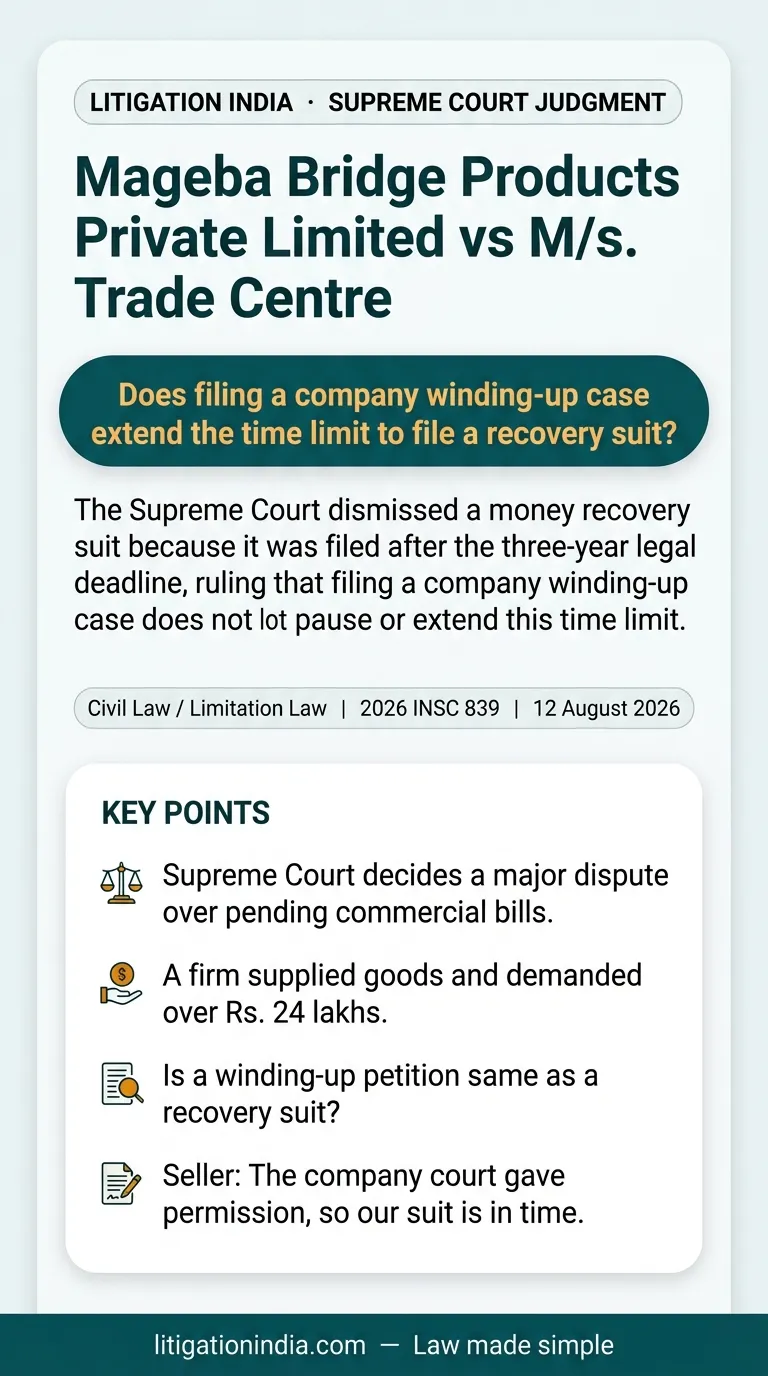
Does filing a company winding-up case extend the time limit to file a recovery suit?
Mageba Bridge Products Private Limited vs M/s. Trade Centre
Case: Mageba Bridge Products Private Limited vs M/s. Trade CentreCitation: 2026 INSC 839Decided on: 12 August 2026
“The Supreme Court dismissed a money recovery suit because it was filed after the three-year legal deadline, ruling that filing a company winding-up case does not pause or extend this time limit.”
Story Slides
In short
In this case, a partnership firm (respondent) sued a company (appellant) to recover unpaid bills. The Trial Court initially dismissed the suit, doubting if the firm was legally registered. The First Appellate Court reversed this decision, allowing the recovery. On appeal, the Supreme Court confirmed that the firm was indeed properly registered based on official certificates. However, the main issue was 'limitation'—the legal time limit of three years to file a lawsuit. The respondent argued that because they had filed a winding-up petition against the company in a Company Court, and because some payments were made, their suit was within time. Disagreeing with this, the Supreme Court ruled that a winding-up proceeding is completely different from a recovery suit. Pursuing a winding-up case does not pause or extend the three-year limit to file a regular civil suit for money recovery. Furthermore, the court found that the company had not acknowledged the specific unpaid debts in their letters, and the lawsuit was filed long after the three-year deadline had expired. Consequently, the Supreme Court allowed the appeal and dismissed the recovery suit solely because it was filed too late.
Need clarity on a similar legal issue?
Request free pro bono guidance from a Supreme Court Advocate.
Background
A partnership firm sued a buyer company to recover money for goods supplied under various bills. The buyer argued that the partnership was not registered and that the suit was filed too late, long after the three-year deadline.
The Decision
The Supreme Court accepted that the partnership was registered. However, it dismissed the suit because it was filed past the three-year limit, holding that company liquidation cases do not extend the time to file a recovery suit.
Why it matters for you
This judgment reminds business owners that they must act quickly to recover unpaid debts. You cannot wait and hope that other legal proceedings, like company insolvency or winding-up cases, will save your deadline to file a recovery lawsuit.
AI-assisted summary, reviewed and verified by our editorial team.
Need help with your case?
Facing a similar legal challenge in the Supreme Court or High Court? Connect with our pro bono volunteer advocates today.
Request Free Callback