In Re: Illegal Sand Mining in the National Chambal Sanctuary
The big legal question
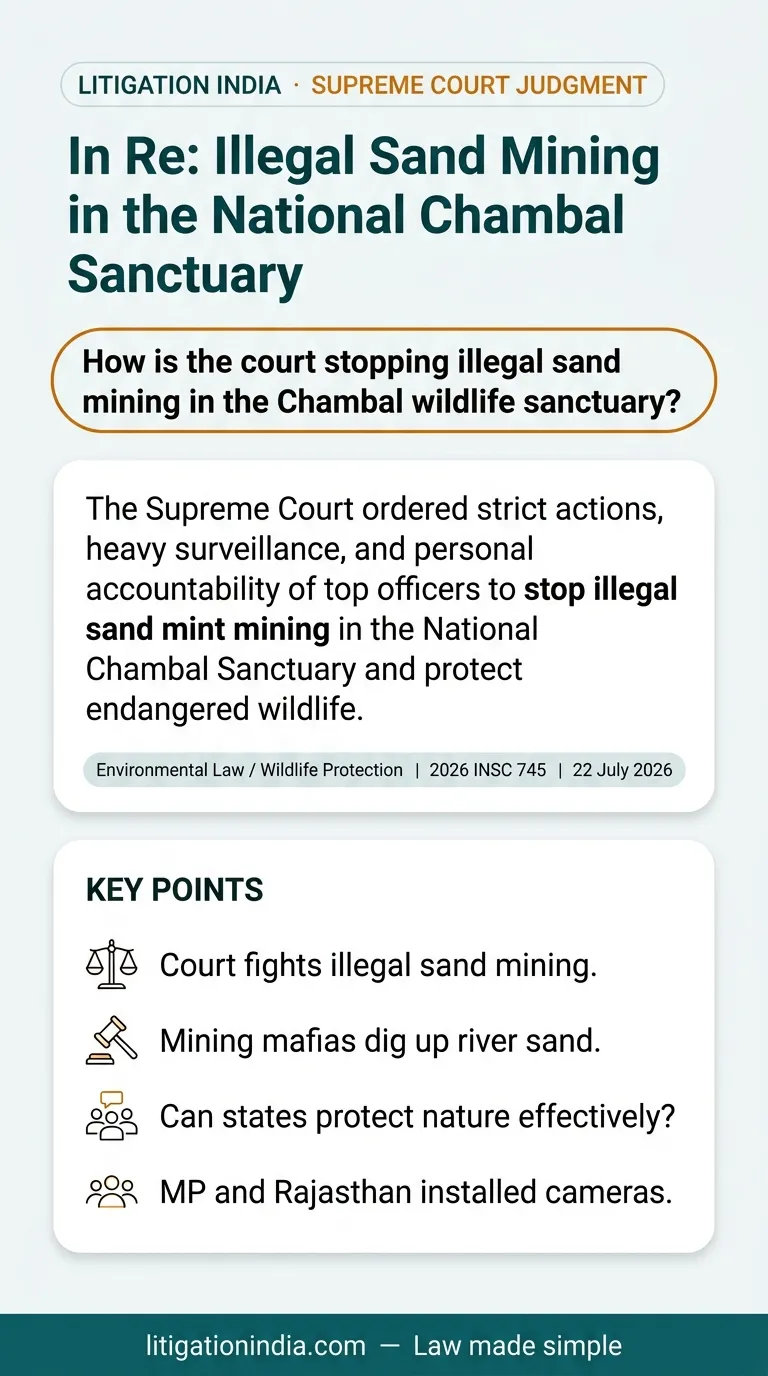
How is the court stopping illegal sand mining in the Chambal wildlife sanctuary?
“The Supreme Court ordered strict actions, heavy surveillance, and personal accountability of top officers to stop illegal sand mining in the National Chambal Sanctuary and protect endangered wildlife.”
Story Slides
In short
This case was started by the Supreme Court itself to address the dangerous problem of illegal sand mining in the National Chambal Gharial Sanctuary. This sanctuary stretches across Madhya Pradesh, Rajasthan, and Uttar Pradesh, and is home to rare river animals like the gharial. Illegal mining is destroying their homes and harming the river's health. To stop this, the Court reviewed reports from the state governments and the Central Empowered Committee. While Madhya Pradesh and Rajasthan have set up CCTV cameras, drones, and checkposts, Uttar Pradesh has been slow. The Court expressed concern that states are not arresting the main gang leaders under strict laws. To fix this, the Court issued strong orders: First, top local officers like District Magistrates and Police Chiefs will be personally held responsible if mining continues. Second, forest guards must be given legal protection so they can do their jobs without fear of fake complaints. Third, states must set up a simple QR-code system where local citizens can secretly report illegal mining. Fourth, central agencies like the Enforcement Directorate and Income Tax must investigate the money trail of mining mafias to destroy their business. The Court wants these states to act together quickly to save the environment.
Background
Rampant illegal sand mining in the National Chambal Sanctuary was destroying the natural homes of endangered river animals like gharials. The Supreme Court stepped in to force Madhya Pradesh, Rajasthan, and Uttar Pradesh to work together to protect the river environment.
The Decision
The Court ordered the states to install high-tech cameras, protect forest guards from fake cases, and make District Magistrates and Police Chiefs personally accountable. It also directed financial agencies to investigate mining mafias and set up a QR-code based system for citizens to report complaints safely.
Why it matters for you
This judgment shows that protecting nature is a top priority, and government officers cannot escape responsibility for environmental damage. It also empowers ordinary citizens to actively protect their local environment through safe, confidential digital complaints.
AI-assisted summary, reviewed and verified by our editorial team.
Need help with your case?
Facing a similar legal challenge in the Supreme Court or High Court? Connect with our pro bono volunteer advocates today.
Related Supreme Court services