In Re: Guidelines on Sensitivity in Sexual Offence Cases
The big legal question
How should courts and police treat victims of sexual crimes with dignity?
“The Supreme Court approved a mandatory handbook to ensure judges, police, and courts use sensitive, dignified, and stereotype-free language when dealing with sexual offense victims.”
Story Slides
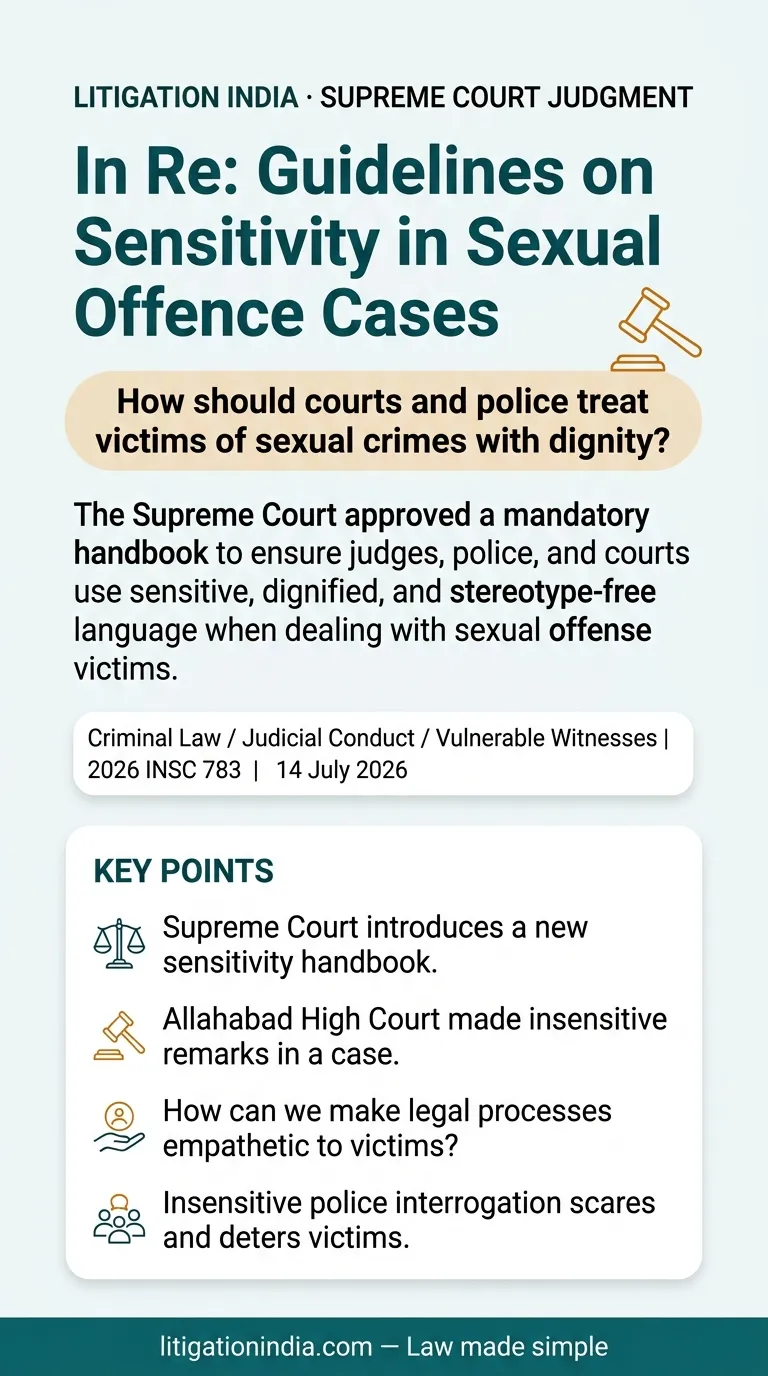
In short
The Supreme Court of India took up this matter on its own (suo moto) after a women's organization, 'We the Women of India,' raised concerns about insensitive remarks made by the Allahabad High Court in a sexual offense case. The Supreme Court set aside the High Court's order and sent the case back to a special POCSO court. To address a wider systemic issue, the Court formed a special expert committee headed by former Supreme Court Judge, Justice Aniruddha Bose. The committee was tasked with creating guidelines to bring sensitivity, compassion, and empathy into courtrooms, especially for cases involving children, women, and other vulnerable victims. The committee created a comprehensive handbook that explains how insensitive police questions and harsh cross-examinations hurt victims a second time. It lists biased or stereotypical words commonly used in courts and provides respectful, neutral alternatives. Crucially, the guidelines focus on local and regional languages used in lower courts, rather than just English. The Supreme Court approved this handbook and made it a mandatory guide. It ordered all High Courts, district courts, tribunals, and police departments across India to upload, distribute, and follow these guidelines. Police officers must follow these respectful language standards when writing FIRs and chargesheets. Ultimately, the judgment aims to make the justice delivery system more humane and protect the dignity of everyone seeking justice.
Background
The Supreme Court took notice of insensitive remarks made by the Allahabad High Court in a sexual offense case. A women's group highlighted this issue, prompting the Supreme Court to cancel that order and start a larger mission to make courts across India more sensitive to vulnerable victims.
The Decision
The Supreme Court approved a new mandatory handbook filled with guidelines for sensitive court language and behavior. It ordered the police, tribunals, and courts at all levels to strictly follow these rules to avoid hurting victims during investigations and trials.
Why it matters for you
This judgment makes the legal system kinder and more approachable for common people, especially children and women. It ensures that survivors of sexual crimes do not suffer secondary trauma or humiliation from judges or police officers during their fight for justice.
AI-assisted summary, reviewed and verified by our editorial team.
Need help with your case?
Facing a similar legal challenge in the Supreme Court or High Court? Connect with our pro bono volunteer advocates today.
Request Free Callback