Gayatree Pattnaik vs. Arundhati Sahoo
The big legal question
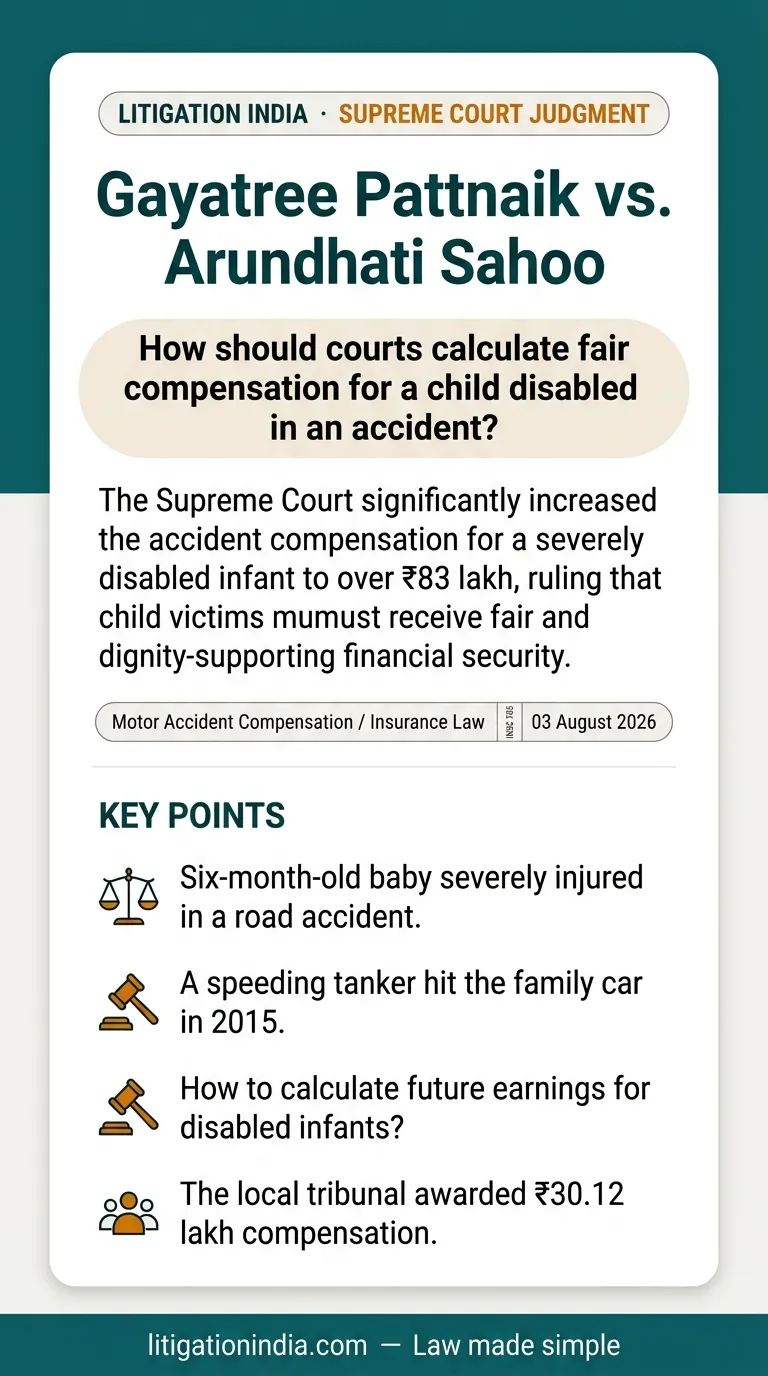
How should courts calculate fair compensation for a child disabled in an accident?
“The Supreme Court significantly increased the accident compensation for a severely disabled infant to over ₹83 lakh, ruling that child victims must receive fair and dignity-supporting financial security.”
Story Slides
In short
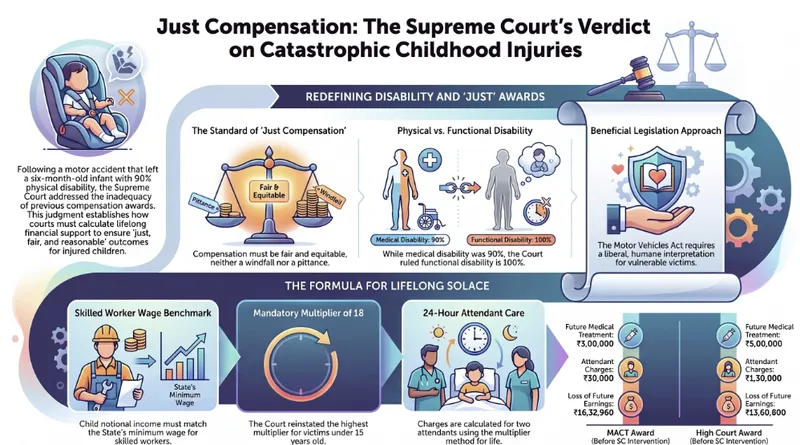
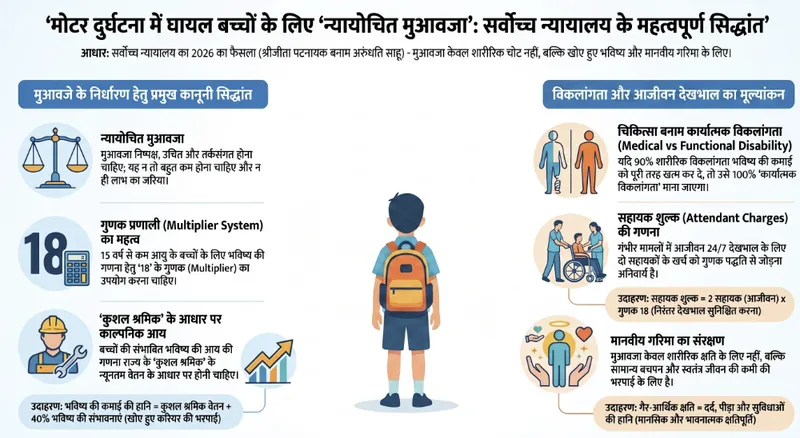
The Supreme Court of India in this landmark judgment enhanced the accident compensation for a six-month-old baby girl, Shreejita Pattnaik, who suffered 90% permanent physical disability due to a road accident in 2015. The accident left her paralyzed from the waist down, bedridden, and entirely dependent on others for life. The Motor Accident Claims Tribunal (MACT) had awarded ₹30.12 lakh, which the High Court increased to ₹45.40 lakh. However, the Supreme Court ruled that both courts failed to grant 'just compensation.' The Court clarified three major principles for cases involving child victims. First, even if physical disability is certified at 90%, the 'functional disability' (the actual impact on life and earning capacity) is 100% since her entire future is ruined. Second, a child's notional future income must be calculated using the minimum wages of a 'skilled worker' rather than an unskilled laborer. Third, calculations for lifelong expenses like medical care and assistants (attendants) must use the 'multiplier method' to account for inflation and long-term needs. Applying these rules, the Supreme Court enhanced the total compensation to ₹83,38,360. It also raised the interest rate from 6% to 9% per annum from the date the case was filed. This judgment ensures that child accident victims can live a life of dignity with adequate financial support.
Background
In June 2015, a six-month-old baby girl was severely injured when a recklessly driven tanker collided with her family's car. The accident caused permanent damage to her spinal cord, leaving her paralyzed and entirely dependent on others for the rest of her life.
The Decision
The Supreme Court set aside the High Court's calculation and enhanced the total compensation from ₹45.40 lakh to ₹83.38 lakh. It directed the insurance company to deposit the entire enhanced amount with 9% interest within six weeks before the tribunal.
Why it matters for you
This judgment is highly significant because it establishes that a child's compensation cannot be calculated like an adult's. It sets a strong precedent that courts must evaluate a victim's loss of life dignity, emotional suffering, and the long-term impact of inflation when awarding damages.
Photos
AI-assisted summary, reviewed and verified by our editorial team.
Need help with your case?
Need help securing compensation under the Motor Vehicles Act? Our accident claims advocates can guide you.
Related Supreme Court services