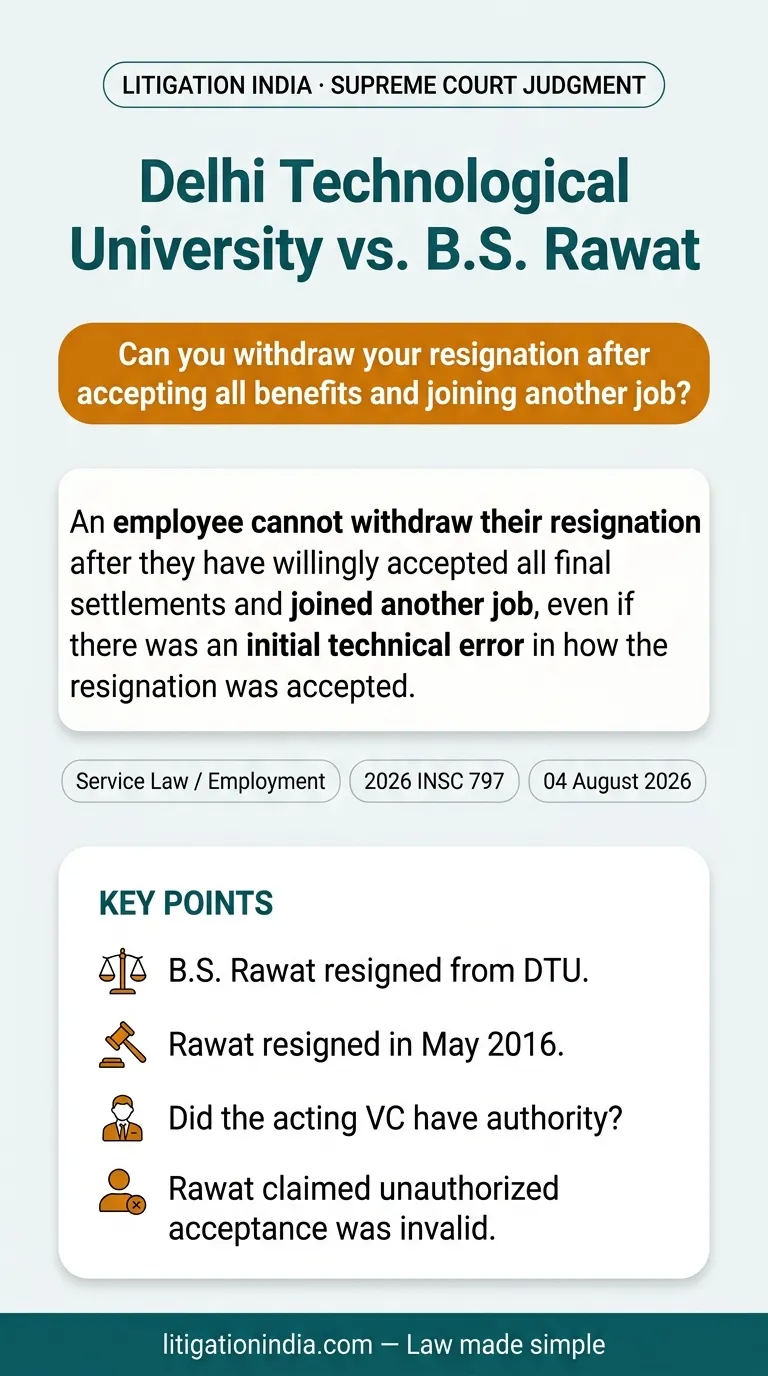
Delhi Technological University vs. B.S. Rawat
The big legal question
Can you withdraw your resignation after accepting all benefits and joining another job?
“An employee cannot withdraw their resignation after they have willingly accepted all final settlements and joined another job, even if there was an initial technical error in how the resignation was accepted.”
Story Slides
In short
This case involves an employee, B.S. Rawat, who resigned from his job at Delhi Technological University (DTU). He requested to be relieved early, collected his final settlement and experience certificate, and used them to join another job at NIT Calicut. Later, he tried to withdraw his resignation, claiming that the acting Vice-Chancellor who accepted it did not have the official power to do so, and only the Board of Management did. Meanwhile, he also resigned from NIT Calicut and tried to withdraw that resignation too. The Supreme Court decided against the employee. The Court explained the 'Doctrine of Ratification,' which means if an unauthorized person does an act (like accepting a resignation), and the actual authority later approves it, the act becomes valid from the very beginning. Furthermore, the Court said a person cannot 'have their cake and eat it too.' Since the employee willingly resigned, took his final dues, and used his experience certificate to get a new job, he cannot later use a technical loophole to claim his resignation was invalid. In the NIT Calicut matter, the Court held that once a resignation is accepted, it takes effect legally. The employee has no absolute right to withdraw it during the notice period before being physically relieved, especially if the employer provides valid reasons to reject the withdrawal.
Background
An employee resigned from DTU, took his final clearance and experience certificate, and joined NIT Calicut. Later, he tried to withdraw his resignation from both institutions, claiming technical errors in how his resignations were accepted.
The Decision
The Supreme Court ruled that once a resignation is complete and the employee has taken all benefits, they cannot challenge it on technical grounds. The court rejected the employee's request for reinstatement and dismissed his appeals.
Why it matters for you
This judgment clarifies that employees cannot play fast and loose with resignations. Once you willingly resign, take your dues, and move to another job, you cannot use administrative loopholes to demand your old job back.
AI-assisted summary, reviewed and verified by our editorial team.
Need help with your case?
Facing a similar legal challenge in the Supreme Court or High Court? Connect with our pro bono volunteer advocates today.
Related Supreme Court services