
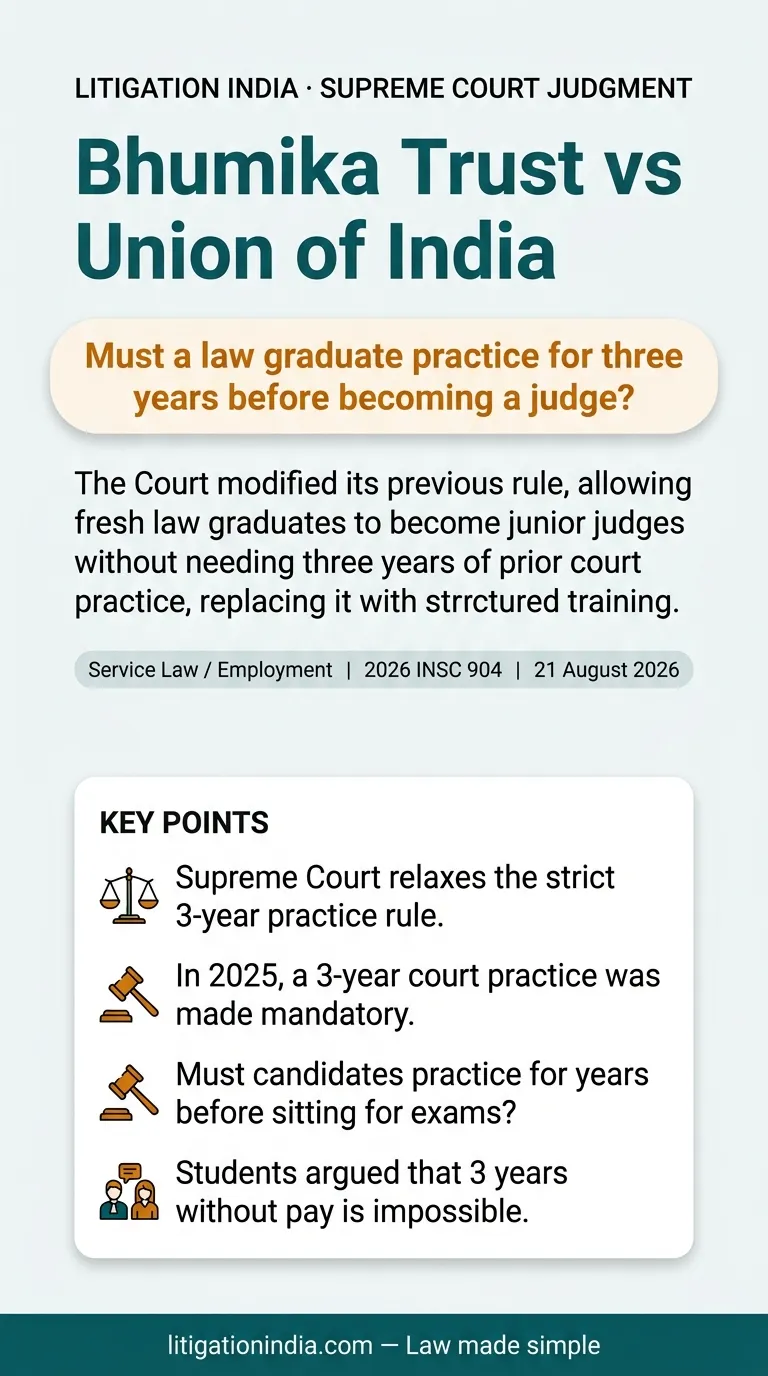
Must a law graduate practice for three years before becoming a judge?
Bhumika Trust vs Union of India
Case: Bhumika Trust vs Union of IndiaCitation: 2026 INSC 904Decided on: 21 August 2026
“The Court modified its previous rule, allowing fresh law graduates to become junior judges without needing three years of prior court practice, replacing it with structured training.”
Story Slides
In short
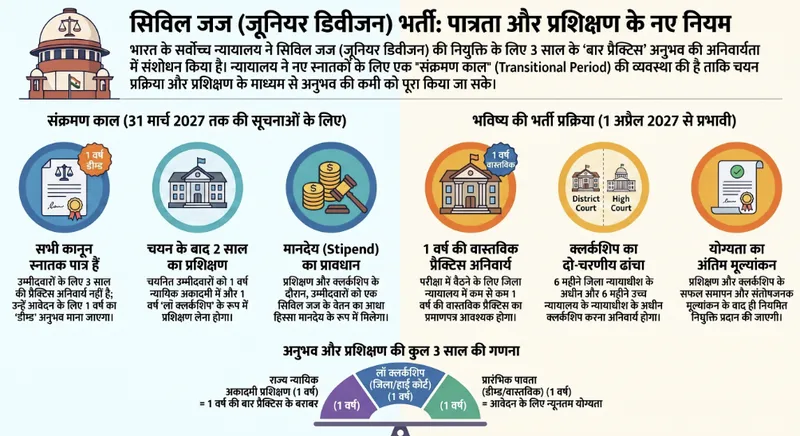
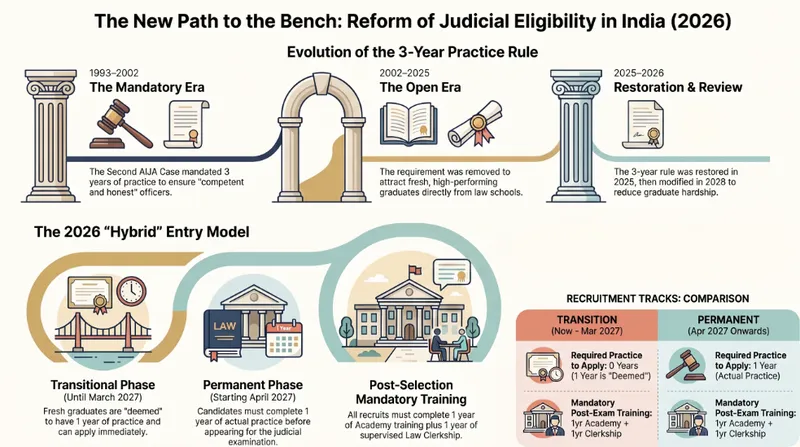
The Supreme Court of India decided on a very important rule about who can become a junior judge (Civil Judge, Junior Division). Earlier, in 2025, the Court had made a strict rule saying that anyone who wants to sit for the judge's exam must have practiced as a lawyer in court for at least three years. This sudden change shocked many fresh law graduates, especially those from poor families, women, and disabled candidates who cannot easily afford to practice for three years with little or no pay. In this new judgment, the Court found a middle path to help these students. For exams announced up to March 31, 2027, fresh law graduates do not need three years of practice to apply. Instead, if selected, they will spend their first year in intensive training at a Judicial Academy, and their second year working as a 'Law Clerk' under senior judges. This training and clerkship will count as their practice. For exams announced after April 1, 2027, candidates will only need one year of actual court practice to apply, followed by the same two years of training and clerkship. This ensures that judges are well-trained and have practical court experience without putting an unfair financial burden on young law graduates.
Need clarity on a similar legal issue?
Request free pro bono guidance from a Supreme Court Advocate.
Background
Earlier, the court ordered that only lawyers with three years of court experience could sit for junior judge exams. Young law graduates and disabled candidates challenged this, saying it is unfair to people who cannot afford to wait three years with no income.
The Decision
The Court modified the rules: for exams up to March 2027, fresh graduates can apply directly but must undergo a two-year trainee and clerkship program after selection. After March 2027, only one year of actual practice is required before applying.
Why it matters for you
This judgment protects the dreams of young law students from modest backgrounds, women, and disabled individuals. It balances the need for experienced judges with the need for equal opportunities for those who cannot survive without a salary.
Photos
AI-assisted summary, reviewed and verified by our editorial team.
Need help with your case?
Facing a similar legal challenge in the Supreme Court or High Court? Connect with our pro bono volunteer advocates today.
Related Supreme Court services
Related Questions of Law
- Can the government force a high-performing officer to retire early shortly after promoting them?
- Can a qualified professor keep his job if his PhD is fake?
- Can local school committees hire government-funded staff without open competition and fair rules?
- Can employers delay processing medical retirement applications to deny compassionate jobs to dependents?
- Can the government cancel a worker's promotion using rules made years later?