Bassanna v. Bhimanna
The big legal question
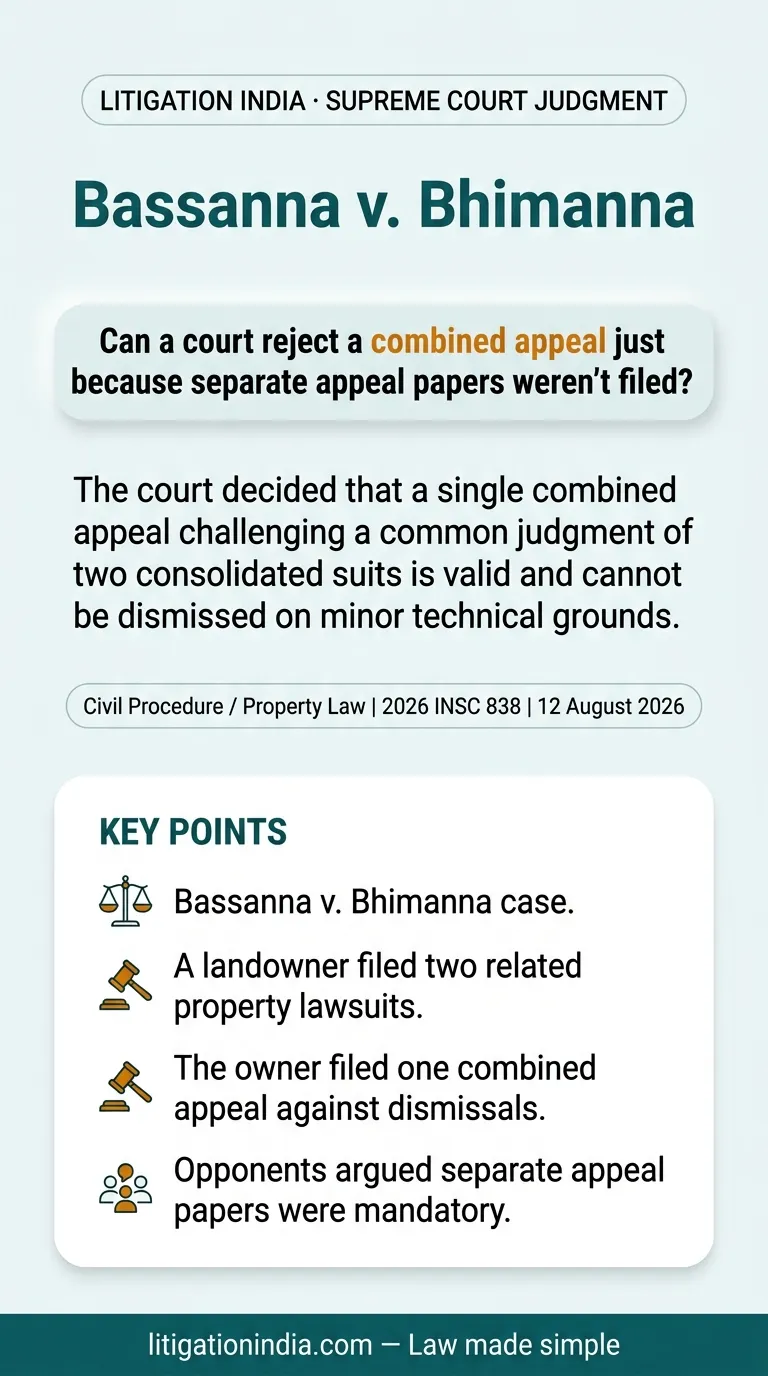
Can a court reject a combined appeal just because separate appeal papers weren't filed?
“The court decided that a single combined appeal challenging a common judgment of two consolidated suits is valid and cannot be dismissed on minor technical grounds.”
Story Slides
In short
In this case, a person filed two different lawsuits against the same defendants regarding a land dispute. Because the issues were closely related, the local trial court clubbed both lawsuits together, conducted a single trial, and dismissed both through a common judgment. The plaintiff wanted to challenge this dismissal. Instead of filing two separate appeal papers, the plaintiff filed a single 'combined appeal.' Crucially, he filed certified copies of both court decrees, paid the complete court fees required for two appeals, and asked the court to set aside both dismissals. The first appeal court accepted this and ruled in his favor. However, the High Court overturned this, holding that the combined appeal was invalid and that two separate appeals should have been filed. The Supreme Court reversed the High Court's decision. It held that the right to appeal is a very important right that cannot be destroyed by minor procedural mistakes. Since the plaintiff had paid the correct fees and submitted all decrees, any failure to file separate appeal papers was a minor error of 'form' and not 'substance.' This mistake was easily curable, and the High Court should have given the plaintiff a chance to correct it rather than throwing out the case completely. The Supreme Court ordered the High Court to hear the case again on its merits.
Background
A plaintiff filed two linked land lawsuits that were tried together and dismissed by a single trial court judgment. The plaintiff appealed this dismissal through one combined appeal, paying full fees and attaching both final orders.
The Decision
The Supreme Court ruled that the combined appeal was fully valid because the procedural defect was minor and curable. It set aside the High Court's technical dismissal and ordered a fresh decision on the merits.
Why it matters for you
This judgment protects common citizens from losing their cases over minor, clerical, or procedural mistakes. It establishes that courts should focus on doing actual justice on merits rather than getting stuck in technical rules.
AI-assisted summary, reviewed and verified by our editorial team.
Need help with your case?
Facing a property, eviction, or landlord-tenant dispute? Consult our property lawyers for a free initial review.
Related Supreme Court services