Ajit Singh vs State of Rajasthan & Ors.
The big legal question
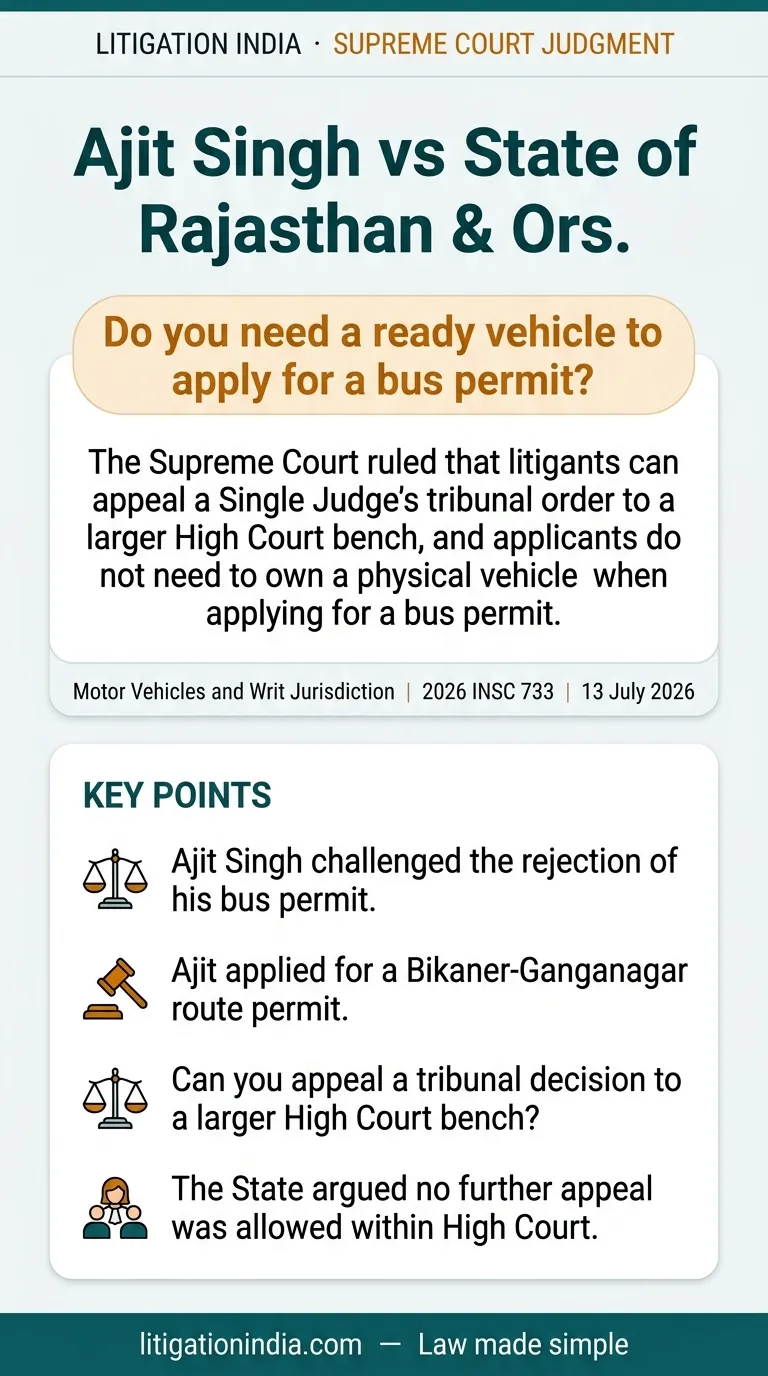
Do you need a ready vehicle to apply for a bus permit?
“The Supreme Court ruled that litigants can appeal a Single Judge's tribunal order to a larger High Court bench, and applicants do not need to own a physical vehicle when applying for a bus permit.”
Story Slides
In short
This case is about Ajit Singh, who wanted to run a passenger bus on the Bikaner-Ganganagar route in Rajasthan. The transport authority rejected his application because they claimed he already had another permit. When he appealed, the Rajasthan High Court's Single Judge also rejected it, arguing he only had one vehicle and could not run it on two routes. Ajit then filed an appeal before a larger bench (Division Bench) of the High Court. However, this appeal was dismissed as 'not maintainable' because the court mistakenly believed he had filed his petition under Article 227 (supervisory powers), which does not allow further internal appeals, rather than Article 226 (writ powers). The Supreme Court ruled in Ajit's favor. It clarified that a citizen has the right to challenge tribunal decisions under Article 226, which allows them to appeal to a larger High Court bench. Additionally, the Court clarified two major rules for bus operators: first, there is no limit on how many permits one person can hold. Second, you do not need to physically own a vehicle at the exact time of applying for a permit; you only need to show it before the permit is finally issued. The Supreme Court ordered the tribunal to rehear Ajit's case within six months.
Background
Ajit Singh applied for a bus permit on the Bikaner-Ganganagar route. The transport authorities and a Single Judge of the High Court rejected his request, claiming he could not run his single vehicle on multiple routes.
The Decision
The Supreme Court allowed the appeal and set aside the previous orders. It directed the transport appellate tribunal to hear Ajit Singh's appeal again and make a fresh decision within six months.
Why it matters for you
This judgment confirms that litigants can appeal a Single Judge's decision regarding tribunals to a larger High Court bench. It also protects small transport businesses by confirming that buying a vehicle before getting a permit is not mandatory.
AI-assisted summary, reviewed and verified by our editorial team.
Need help with your case?
Need help securing compensation under the Motor Vehicles Act? Our accident claims advocates can guide you.
Related Supreme Court services